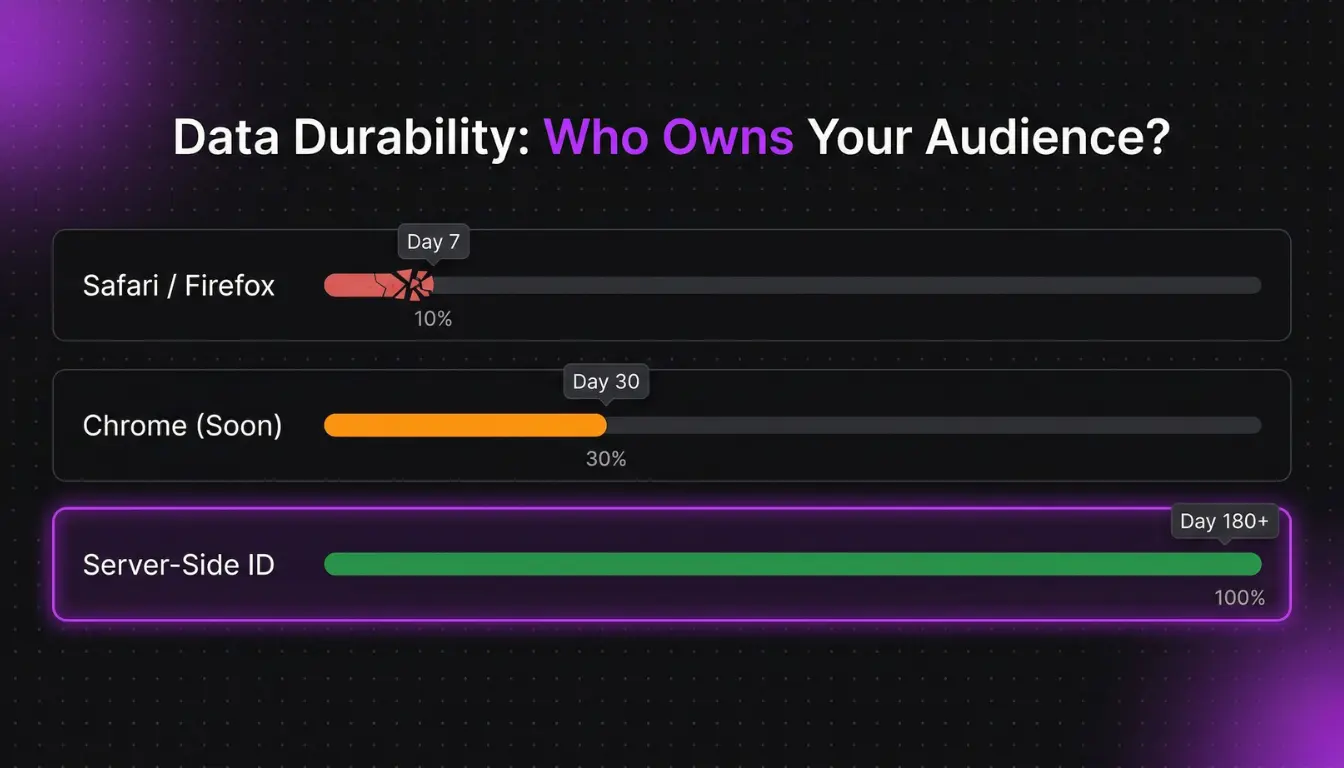

How ITP Drives Signal Loss in Facebook Ads
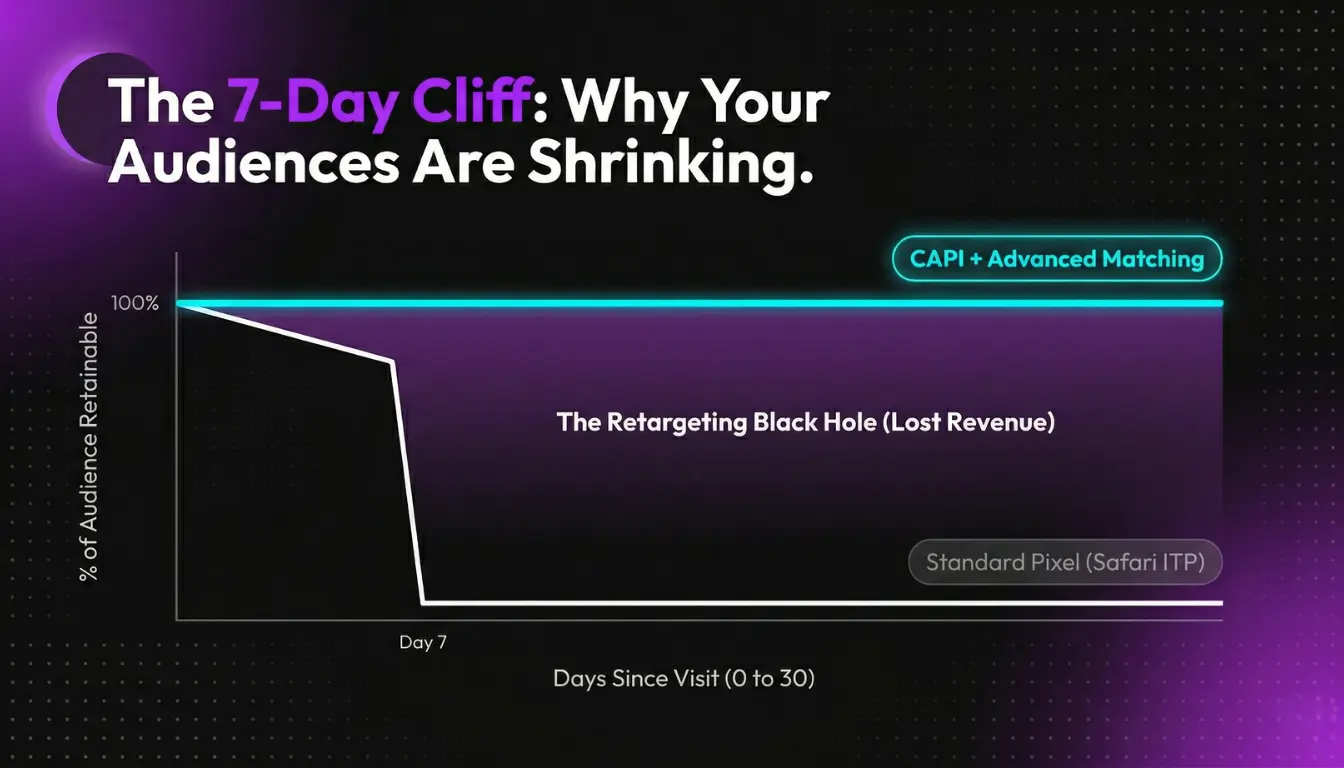
Let’s get technical for a second, but I promise to keep it painless. The reason your audiences are shrinking isn’t because people stopped visiting. It is because of Intelligent Tracking Prevention (ITP). Apple’s Safari browser, which dominates mobile traffic in the US, has a strict policy regarding client-side cookies. If a user visits your site via an ad, the cookie dropped by your pixel is often capped at 7 days. In some cases, it is capped at 24 hours. The Scenario:- Day 1: Sarah clicks your ad on her iPhone. She browses, adds to cart, but gets distracted by a notification.
- Day 8: Sarah remembers your product. You want to show her a “Come Back” ad.
Stop Renting, Start Owning (Identity vs. Cookies)
We have to stop relying on cookies, which the browser owns, and start relying on First-Party Data, which you own. This is the core philosophy behind a proper Server-Side Tracking setup. We aren’t just sending events. We are resolving identity.
Advanced Matching is the process of sending hashed First-Party Data like email, phone number, city, or external ID from your server to Meta alongside the event. This allows the platform to match a visitor to their profile even if their cookie has been deleted.
Think of it like this:
- A Cookie is a sticky note put on the user’s back. The wind of Apple updates blows it off easily.
- Hashed Data via Server-Side Tracking is a fingerprint. It does not matter if they change browsers or clear their cache. The fingerprint stays and matches.
The Cross-Device Attribution Nightmare
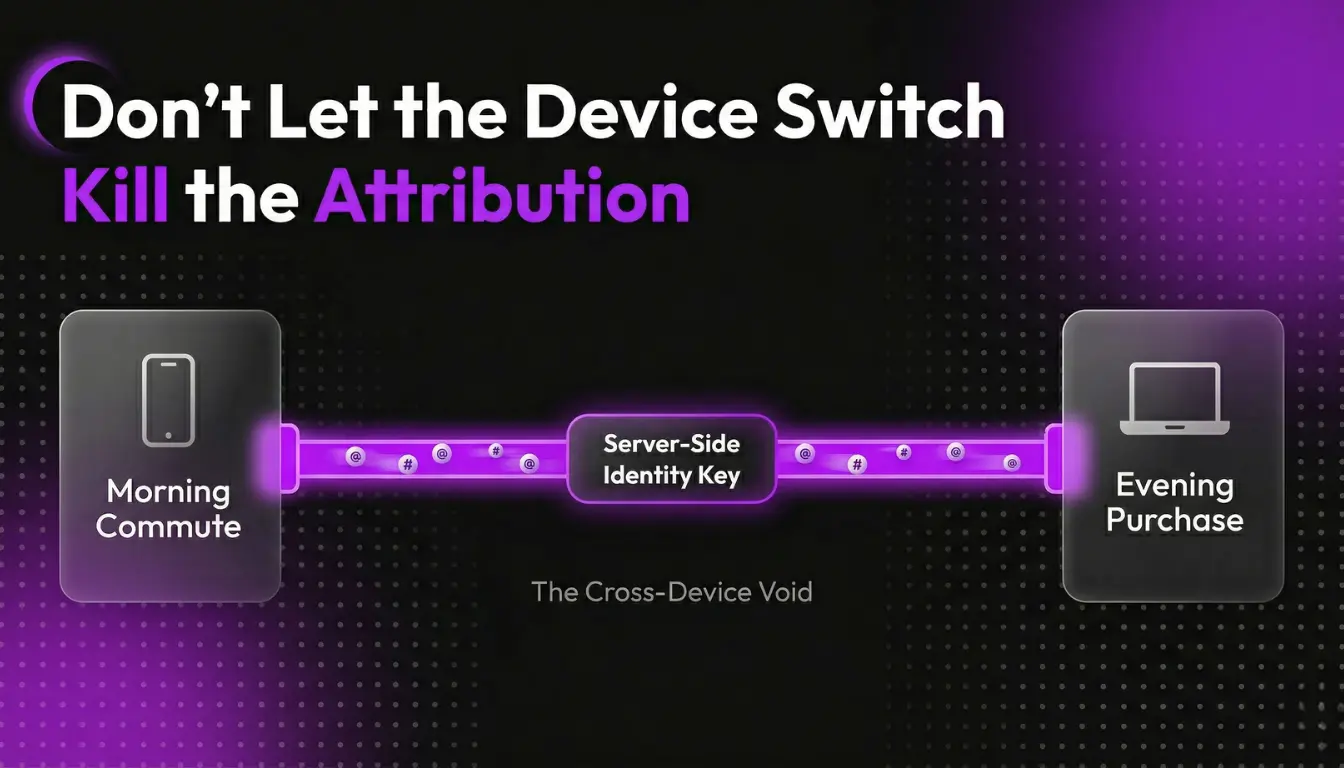
Here is another scenario that drives Agency Founders crazy. A user clicks an ad on Instagram Mobile. They browse and like it. Later that night, they sit down at their Desktop to buy.
Without Conversion API (CAPI): The Pixel sees two different people. The Mobile User looks like a bounce, and the Desktop User looks like direct traffic. Your ad looks like a failure. Your retargeting failed because you could not bridge the gap.
With CAPI: We capture the email or phone number on the checkout form. We hash it and send it to Meta. Meta looks at its database and realizes this hash matches the Instagram user from this morning.
The result is that the sale is attributed to the ad. The user is removed from the Non-Buyers list so you do not annoy them.
Why Agencies Must Pivot to Identity Resolution
If you run an agency, the retention conversation is getting harder. Clients are asking why ROAS is down. They want to know why their Facebook Retargeting Audiences aren’t converting like they did in 2021. If you tell them that iOS is just tough right now, you sound like every other struggling media buyer. You sound helpless. But if you tell them their audiences are artificially capped at 7 days and you are implementing an Identity Resolution architecture to extend that window to 180 days, you become an Architect. You are solving the problem of Signal Loss in Facebook Ads, not just pushing buttons. This directly ties into The ‘Digital Hoarders’ Problem. Collecting more data is not the goal. Collecting durable data is. A small list of high-fidelity identities is worth ten times more than a massive list of decaying cookies.From ROAS to LTV
Fixing your Facebook Retargeting Audiences does more than just make your weekly report look green. It fundamentally changes the economics of the account. When you stop losing users to the Black Hole, your Customer Acquisition Cost (CAC) stabilizes. You do not have to constantly burn cash on cold traffic to refill a leaking bucket. We talk about this financial shift in from ROAS to POAS: Why Profit is the Only Metric That Scales. The most profitable dollar you spend is on the person who almost bought. If you let technology block you from talking to them, you are voluntarily lowering your margin.Don’t Let Old Vendors Break Your New SitThe Participation Trophy Check
Having the Advanced Matching toggle turned on in your store settings is not enough. We audit accounts daily where the client thinks they are sending hashed data, but the server logs show the data is malformed or missing entirely. A checkmark in settings is a participation trophy. It does not mean it works.