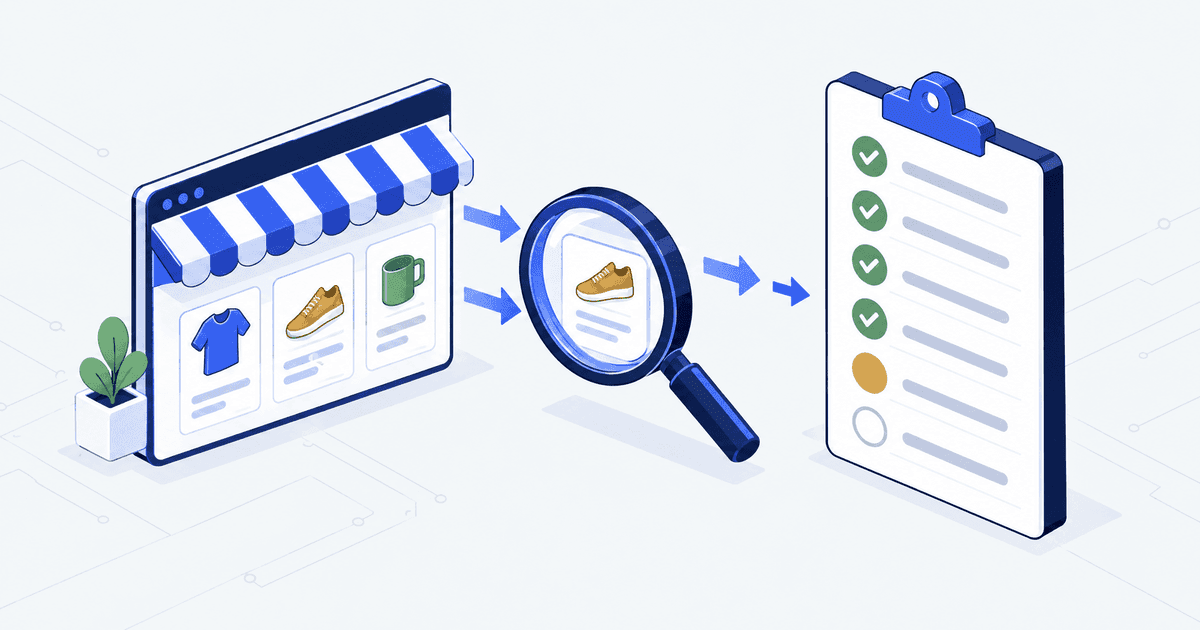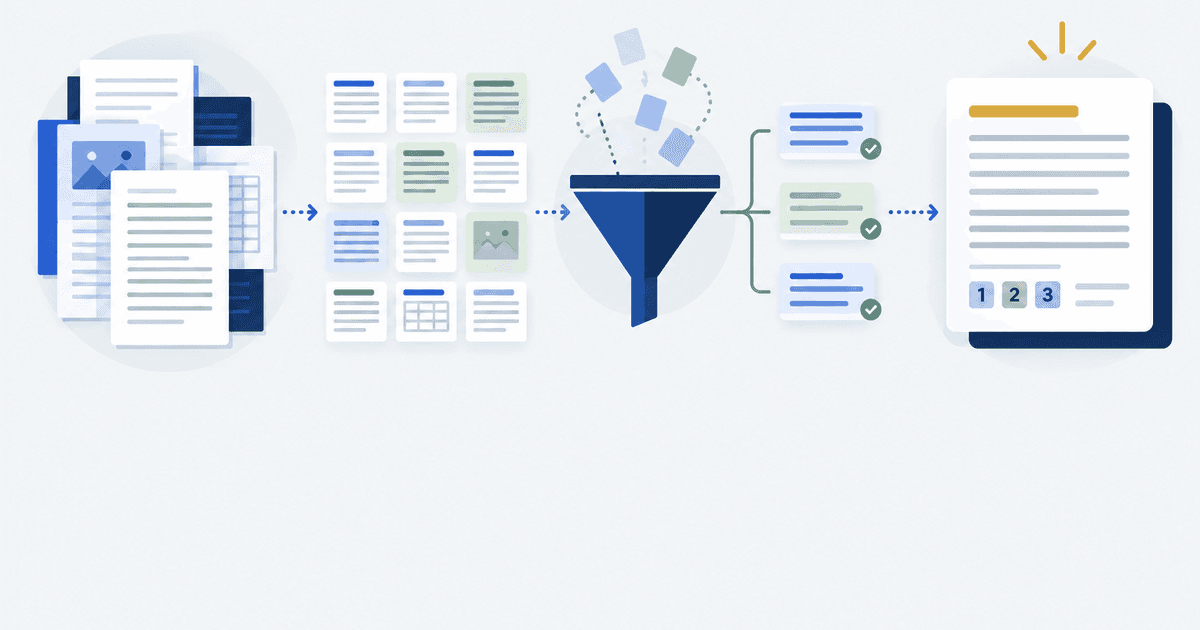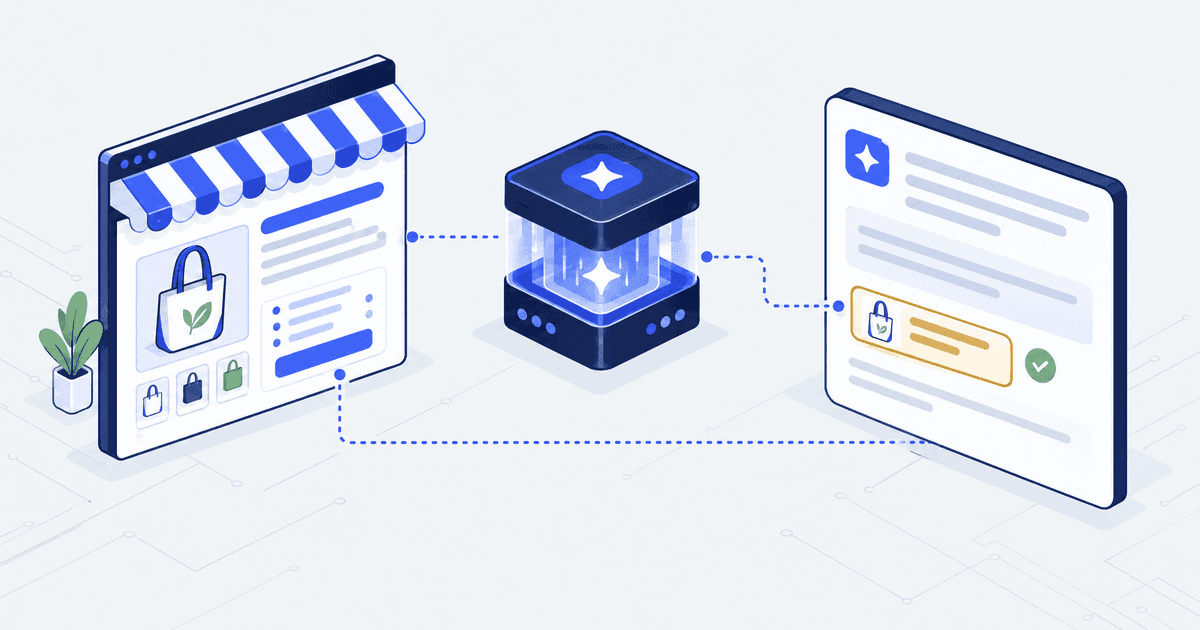

Ask Google or ChatGPT which rain jacket to buy and it names a few brands. Getting your store named there is generative engine optimization. Google says it needs no special code. It needs 5 page changes: pages Google can list, a direct first answer, facts in text, consistent policies and one fact only you hold.
Who this is for. You own or run a Shopify store. Agencies keep pitching you AI search work, and you want to know what actually changes on a page. This is not for a store that gets no traffic from search yet. Fix basic search first, then come back.
GEO and AEO are two jobs that sit on top of SEO
SEO, or search engine optimization, is the work that gets a page ranked as a link a shopper clicks.
AEO, or answer engine optimization, is the work that makes one passage on your page easy to lift as the answer. That passage might show as a featured snippet, the boxed answer above the links. Or a voice assistant might read it aloud.
GEO, or generative engine optimization, is the work that gets your brand named or linked inside an answer that AI writes. The writer is a language model, the kind of AI behind ChatGPT. Google’s AI Overviews (the AI summary at the top of some results), ChatGPT search and Microsoft Copilot all write answers like this.
The three stack rather than compete. Before an AI answer can quote your page, a crawler has to read and rank it. A crawler is the program a search engine sends to fetch your pages. Indexable means you allow the engine to list the page.
Our SEO vs AEO vs GEO guide sets out the spending order, with our own numbers. This one shows what changes on your Shopify pages. It also shows how our Shopify SEO and AI search work wins back shoppers who see your store and do not click.
| Job | What the engine does | What the page must do | How you measure it |
|---|---|---|---|
| SEO | Finds, stores and ranks pages as a list of links | Be indexable, load fast, carry a clear title and links from your other pages | Clicks, impressions and position in Google Search Console |
| AEO | Lifts one passage as the answer | Answer the question in the first 40 to 60 words, then explain | Featured snippets and the queries a page answers |
| GEO | Writes a new answer from several sources and credits some | Hold a specific fact, number or policy other pages do not | Brand mentions in AI answers, sampled by hand |
Google and Bing both say the foundation is ordinary search
Google answers this on its own help page, AI features and your website. Google last updated it on 10 December 2025. The page says: “There are no additional requirements to appear in AI Overviews or AI Mode, nor other special optimizations necessary.” AI Mode is Google’s chat-style search. The page adds that you do not need new files written for machines, AI text files or markup. Markup, or structured data, is code that labels a page for machines: this is the price, this is the rating.
Google also says AI Overviews and AI Mode may use “query fan-out”. The system runs several related searches across subtopics, then writes one answer. Say a shopper asks for a waterproof jacket for a wet hiking trip. That triggers searches about fabric, fit and care. Each one is a chance for your page to be the source.
Bing says the same thing from the other side. Its Webmaster Guidelines say Bing and Copilot use the same system to find, store and rank pages as classic search does. They also say structured data may help an AI answer check its facts against real web pages, a step called grounding. It does not guarantee your page appears.
A sitemap is the list of pages your store gives search engines. Bing’s July 2025 post on sitemaps in AI search asks for an accurate last-modified date, called lastmod, for each page in your sitemap. The post also recommends IndexNow. It is a shared standard that lets your site tell search engines the moment a page changes.
The decision rule. If a search engine has not indexed (stored) a page, no AI feature can use it. Check indexing in Google Search Console, Google’s free search report, and in Bing Webmaster Tools, its Bing equivalent, before you spend an hour on anything with “GEO” in its name.
What changes on a Shopify product or collection page
Most of the work lands on pages you already have. Shopify handles three technical basics for you, according to its SEO overview. The sitemap lists your pages for search engines. The robots file says which addresses they should skip. When several addresses show the same page, a canonical tag says which one is the main version. What Shopify cannot write is the content an answer needs.
- A direct answer at the top of each collection. Put two or three sentences above the product grid. Say what the range is, who it suits and the one fact a shopper asks most. Many themes print the collection description there; check yours.
- Product facts in text, not in images. Fabric, dimensions, care, fit and lead time belong in the description or in metafields. A metafield is an extra product field your theme can print as text. A size chart saved as a picture is invisible to an answer engine.
- One answer per question, kept consistent. Shipping windows, returns and sizing should read the same on the product page, the policy page and the FAQ. An AI answer that finds two versions picks one, and it may not be yours.
- Structured data that matches the page. Structured data is also called schema. Shopify themes ship product schema by default. If you add structured data to an FAQ, the same question and answer must be visible on the page.
- One thing only you can say. A measured result, a fit note from your own returns data, a material you source directly. This is what a generative answer credits by name.
None of these is a new channel. Each one also helps your ordinary ranking. Our Shopify SEO checklist covers the technical side, from duplicate product links to code left behind by old apps.
What the research measured, and what it did not
The term comes from a 2023 paper, GEO: Generative Engine Optimization, by Aggarwal and colleagues. A major data-science conference accepted it in 2024. The authors wrote 10,000 test questions and rewrote source pages in different ways. Their headline: the right edits raised a page’s visibility in AI answers by up to 40%.
Three edits worked best: adding quotations, adding statistics and citing sources. Keyword stuffing, the old SEO habit, did slightly worse than doing nothing. The authors tested on an answer engine they built on GPT-3.5, an OpenAI model of the kind behind ChatGPT. They then checked the methods on Perplexity, a public AI search tool.
Read it as direction, not a forecast. It measured how much of a source’s text appeared in an answer, on a research test set. It did not measure sales, Google’s AI Overviews, or a Shopify store. The lesson that transfers is simple: specific, sourced facts get quoted, and padding does not.
Our order starts with the shoppers you already almost have
Your quickest return is the shopper who already sees your page in results and does not click. Those visits are lost sales today, and you need no new content to win them back. So we start there, with the same sequence we run on our own sites.
- Indexing. Set up Search Console and Bing Webmaster Tools, submit sitemaps, and read the robots file line by line.
- The pages already drawing impressions. An impression is one time your page appears in someone’s results. We rewrite titles and the first 50 words of the pages people already see, because those pages are closest to being quoted.
- Answer structure. A direct answer, then a table, then the detail, on collections and the few guides that carry revenue.
- First-hand evidence. One number or fact per page that nobody else holds, with the source named.
- A monthly sample. We ask the same shopper questions in Google, ChatGPT search and Copilot, and log who gets named.
On SafaiKaro, the pest control business we own and run, this order is on the record. Publishing the pages people searched for took the count of pages earning search impressions from 24 to 40. That compares the 35 days on each side of the 23 July 2026 release. It is a search result, not an AI citation result.
| Measurement | Result | Source and window | What it does not tell you |
|---|---|---|---|
| Visibility gain from GEO edits | Up to 40% | Aggarwal et al., GEO-bench, KDD 2024 | Sales, or Google AI Overviews |
| Clicks on links inside an AI summary | 1% of visits | Pew Research Center, March 2025 | Brand recall from being named |
| Clicks on any result, summary vs none | 8% vs 15% of visits | Pew Research Center, March 2025 | Results for shopping queries alone |
| Pages earning search impressions | 24 to 40 | SafaiKaro, 35 days each side of 23 July 2026 | Whether AI answers cite those pages |
Where GEO is overhyped, and who should not bother
The honest limit. Nobody can promise that an AI answer will name your brand. The engines do not publish how they choose sources, and the answers change between runs. Google also counts AI feature traffic inside the ordinary Web search totals in Search Console, with no separate line.
That last point is on the same Google page: visits from AI features count in your overall search traffic. So if a vendor sells you an “AI visibility score”, they are selling their own sample, not a platform metric. Ask how they sampled it.
Three groups should skip dedicated GEO work for now:
- Stores with no traffic from search. Fix ranking first.
- Brands that sell only on marketplaces. They have no pages of their own to be cited.
- Catalogues of identical resold products with manufacturer copy. They have nothing unique for an answer to credit.
The click is also smaller than the headline suggests. Pew Research Center tracked 68,879 Google searches in March 2025. Users clicked a link inside an AI summary in 1% of visits. Being named helps shoppers recognize you. It rarely sends a visit on its own.
How to choose an AEO agency without buying a slogan
If you hire for this, ask three questions:
- What will you change on my pages in the first month?
- How will you show me it worked, given Search Console has no AI line?
- What will you refuse to promise?
A good answer names pages, how they will check results, and a limit. A weak answer names a score only that agency can calculate.
Questions Shopify brands ask about GEO and AEO
What is generative engine optimization?
Generative engine optimization (GEO) is the work that gets your brand named or linked inside an AI-written answer. Google AI Overviews, ChatGPT search and Copilot all write these answers. In practice GEO means indexable pages, a direct answer near the top, and specific facts with sources.
Is answer engine optimization different from GEO?
Yes. Answer engine optimization (AEO) aims to have one passage lifted as the answer, as a snippet or a spoken reply. GEO aims to have your brand credited inside a new answer written from several sources. The same page can do both.
Do I need an llms.txt file or special schema for AI Overviews?
No. Google states there are no additional requirements to appear in AI Overviews or AI Mode. You need no AI text files, such as llms.txt (a plain-text summary of a site written for AI tools), and no new markup. Keep pages indexable, allow snippets, and make sure any structured data matches the visible page.
Can I see AI Overview traffic in Search Console?
Not as its own line. Google counts traffic from AI features inside the ordinary Web search totals in the Performance report, where Search Console shows your clicks. Track brand searches and sample AI answers by hand each month. Treat the result as an estimate, not a count.
Does Shopify do any of this automatically?
Part of it. Shopify generates the sitemap, robots file, canonical tags and product schema in its themes. It cannot write the answer-first copy, the consistent policies or the first-hand facts an AI answer credits. That part is yours to write and keep up to date.
Facts checked 6 October 2026. Google and Bing pages were re-read that day. Re-check the Google AI features page by 6 January 2027.