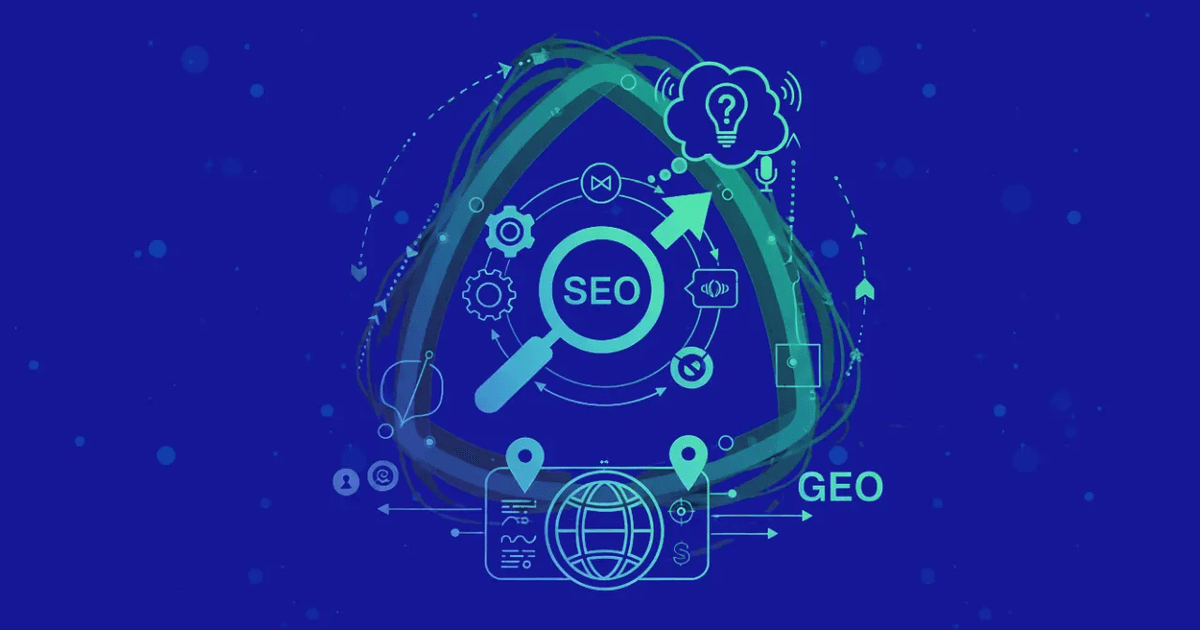
SEO (Search Engine Optimization)<\/h2>\nBack in the day, SEO was the whole game.<\/p>\nWhen you wrote blogs, you added keywords, got backlinks, and watched your rankings climb. Search engines used to reward websites that checked technical boxes and built authority over time.<\/p>\nCore pillars of traditional SEO:<\/p>\n\n- Keywords: Using terms that people searched for, naturally being woven into titles, headings, and copy.<\/li>\n
- Backlinks: Getting other trusted websites to link to your pages.<\/li>\n
- Technical SEO: Optimizing the site speed and mobile responsiveness<\/li>\n
- Content Quality: To create helpful, consistent, original content.<\/li>\n<\/ul>\nThis worked for a long time. But search habits evolved, and people stopped typing just two or three keywords. Instead of this, they began asking full questions.<\/p>\n <\/p>\n
The Shift: From Keywords to Questions<\/h2>\nVoice search changed everything.<\/a><\/p>\nInstead of \u201cbest Italian restaurants Karachi,\u201d people started to ask \u201cWhere\u2019s the best Italian restaurant near me?\u201d<\/p>\nSearch engines adapted by improving natural language processing and rewarding content that directly answered questions.<\/p>\nThat change gave rise to Answer Engine Optimization.<\/p>\n <\/p>\nWhat is Answer Engine Optimization?<\/h2>\nIf SEO is about ranking, AEO on the other hand is about responding.<\/p>\nIt actually answers your queries instead of just linking sources.<\/p>\nWhat AEO focuses on<\/p>\n\n- Writing in Q&A format, which addresses user intent right away.<\/li>\n
- Building short and conversational answers which is perfect for voice assistants.<\/li>\n
- Creating clear hierarchies (H2s, lists, and tables) which AI systems can then interpret easily.<\/li>\n<\/ul>\nWhen someone asks Google a question, only one snippet usually gets featured. That single slot is now the new number 1 Position. Winning that spot = means you\u2019ve become the trusted voice for that query.<\/p>\n <\/p>\n
What is Generative Engine Optimization?<\/h2>\nWe have now entered the era of GEO, or Generative Engine Optimization, where AI tools like ChatGPT and Gemini summarize the answers rather than just displaying links.<\/a><\/p>\nGenerative search finds your content but it also rewrites it, blending multiple sources into a single answer.<\/p>\nThat means the question isn\u2019t just \u201cHow do I rank on Google?\u201d but \u201cHow do I get mentioned by AI?\u201d<\/a><\/p>\nWhat GEO focuses on<\/p>\n\n- Entity recognition: AI models rely on structured, context-rich data. Mention relevant people, places, brands, and technologies.<\/li>\n
- Citation signals: When your content is accurate, detailed, and consistent across the web, it\u2019s more likely to be quoted by AI systems.<\/li>\n
- Structured, skimmable content: Tables, lists, and subheadings make your work machine-readable.<\/li>\n
- Trust signals: External mentions, verified authors, and cross-platform consistency improve visibility.<\/li>\n<\/ul>\nIf SEO was about ranking, and AEO was about answering, GEO is about being referenced, by both humans and machines.<\/p>\n <\/p>\n
<\/p>\n<\/h2>\nE-E-A-T in SEO: Google and AI Rank Content Based on Trust<\/h2>\nZero search volume keywords fit perfectly into this shift, because they mirror real user questions long before they appear in search data.<\/a><\/p>\nAs search evolves from indexing pages to interpreting meaning, one thing has become crystal clear, that trust is the algorithmic backbone of visibility. Whether it\u2019s Google\u2019s crawlers, voice assistants, or generative AI models, systems now prioritize who is speaking just as much as what they\u2019re saying.<\/p>\nThis is where E-E-A-T comes in then.<\/a> It stands for Experience, Expertise, Authoritativeness, and Trustworthiness. It started as a framework for human quality raters at Google, but today, it has become a guiding principle for how content is ranked, cited, and even reinterpreted by AI.<\/p>\nExperience<\/h5>\nAI and search systems now look for proof that content is created by someone who has done the thing they\u2019re writing about. Firsthand stories, original data, and personal insights add credibility that scraped or AI-written summaries can\u2019t replicate.<\/p>\nExample: A travel blogger who has visited a destination and includes personal photos and reviews signals experience that generic listicles lack.<\/p>\nExpertise<\/h5>\nBeyond lived experience, expertise reflects professional or topical depth. Bios, credentials, and niche focus help establish authority.<\/p>\nFor instance, a cybersecurity analyst writing about data breaches has stronger expertise signals than a general tech blogger covering the same topic.<\/p>\nAuthoritativeness<\/h5>\nAuthority builds over time through external validation. Backlinks from respected sites, guest features, media mentions, and speaking appearances all strengthen your reputation in the eyes of search and generative engines.<\/p>\nThink of it as your digital reputation graph, how connected and cited your name or brand is across the web.<\/p>\nTrustworthiness<\/h5>\nThe final pillar, trustworthiness, underpins everything. It\u2019s not just about accurate information; it\u2019s about consistency across platforms. Matching author names, verified social profiles, transparent sources, and secure websites (HTTPS, clear privacy policies) all signal integrity.<\/p>\n <\/p>\nHow E-E-A-T Connects to SEO, AEO, and GEO<\/h2>\n\n- In SEO, E-E-A-T helps pages rank higher by signaling reliability to Google\u2019s algorithms.<\/li>\n
- In AEO, it helps your content win snippets \u2014 because Google chooses trusted voices to answer user questions.<\/li>\n
- In GEO, it determines whether AI models cite you at all. Generative systems like ChatGPT and Gemini are trained to favor well-established, factually reliable entities.<\/li>\n<\/ul>\n
<\/ul>\n\u00a0In the generative era, visibility isn\u2019t earned through keywords, it is earned through credibility footprints.<\/p>\nYour name, your brand, and your content need to tell the same trustworthy story everywhere they appear.<\/p>\n <\/p>\nThe Overlap: You Still Need SEO<\/h2>\nIt\u2019s tempting to think SEO is outdated, but it\u2019s actually the foundation of both AEO and GEO.<\/p>\nWithout strong SEO fundamentals like fast site speed, proper indexing, and domain authority, none of the newer layers work well.<\/p>\nAEO and GEO don\u2019t replace SEO but rather they stack on top of it.<\/p>\n <\/p>\nHow to Build for SEO, AEO and GEO<\/h2>\nStart with SEO<\/span><\/p>\n\n- Audit your site\u2019s technical performance.<\/li>\n
- Fix broken links and missing metadata.<\/li>\n
- Update old blogs with current keywords and clear headings.<\/li>\n<\/ul>\nLayer in AEO<\/span><\/p>\n
\n- Turn major questions into headings.<\/li>\n
- Add FAQs at the end of every key article.<\/li>\n
- Use schema markup so search engines can read your intent.<\/li>\n<\/ul>\nPrepare for GEO<\/span><\/p>\n
\n- Use entity-based writing, mention real brands, people, tools, and sources.<\/li>\n
- Build credibility footprints across the web: consistent profiles, accurate citations, and guest features.<\/li>\n
- Format your content like a machine would read it: bullet lists, tables, and short sections.<\/li>\n<\/ul>\n <\/p>\n
Search Will Keep Evolving<\/h2>\nWe\u2019re moving toward multimodal search, where people will use voice, video, and visuals in one query.<\/p>\nImagine asking,
\u201cShow me eco-friendly sneakers under $100,\u201d
while pointing your camera at your closet.<\/p>\nSearch won\u2019t just index content \u2014 it will understand context.<\/p>\nThe brands that win will be the ones that:<\/p>\n\n- Speak the same language as their users.<\/li>\n
- Structure content that\u2019s both human-friendly and machine-readable.<\/li>\n
- Treat SEO, AEO, and GEO as one connected system, not three separate checklists.<\/li>\n<\/ul>\n <\/p>\n
Final Thoughts<\/h2>\nSEO, AEO, and GEO aren\u2019t rivals. They\u2019re milestones in how people find and trust information online.<\/p>\nThe best strategy isn\u2019t to chase trends, it is to build adaptable systems that meet users wherever they search, type, or ask.<\/p>\nSearch may evolve, but one rule doesn\u2019t change: clear, honest, well-structured content always wins.<\/p>","tablet":"Search used to be simple. You would type in a few words and hope for google to understand what you meant. Now, you speak full sentences on your phone, talk to Siri, even chat with bots.<\/p>\nIn simple terms, search grew up.<\/a><\/p>\nAnd if you want to stay visible in a world where Google, Siri, and AI models like ChatGPT decide what gets seen then understanding SEO, AEO and GEO isn't optional.<\/a><\/p>\n\nSEO (Search Engine Optimization)<\/h2>\n<\/p>Back in the day, SEO was the whole game.<\/p>\nWhen you wrote blogs, you added keywords, got backlinks, and watched your rankings climb. Search engines used to reward websites that checked technical boxes and built authority over time.<\/p>\nCore pillars of traditional SEO:<\/p>\n\n- Keywords: Using terms that people searched for, naturally being woven into titles, headings, and copy.<\/li>\n
- Backlinks: Getting other trusted websites to link to your pages.<\/li>\n
- Technical SEO: Optimizing the site speed and mobile responsiveness<\/li>\n
- Content Quality: To create helpful, consistent, original content.<\/li>\n<\/ul>\nThis worked for a long time. But search habits evolved, and people stopped typing just two or three keywords. Instead of this, they began asking full questions.<\/p>\n\n
The Shift: From Keywords to Questions<\/h2>\nVoice search changed everything.<\/a><\/p>\nInstead of \u201cbest Italian restaurants Karachi,\u201d people started to ask \u201cWhere\u2019s the best Italian restaurant near me?\u201d<\/p>\nSearch engines adapted by improving natural language processing and rewarding content that directly answered questions.<\/p>\nThat change gave rise to Answer Engine Optimization.<\/p>\n\nWhat is Answer Engine Optimization?<\/h2>\nIf SEO is about ranking, AEO on the other hand is about responding.<\/p>\nIt actually answers your queries instead of just linking sources.<\/p>\nWhat AEO focuses on<\/p>\n\n- Writing in Q&A format, which addresses user intent right away.<\/li>\n
- Building short and conversational answers which is perfect for voice assistants.<\/li>\n
- Creating clear hierarchies (H2s, lists, and tables) which AI systems can then interpret easily.<\/li>\n<\/ul>\nWhen someone asks Google a question, only one snippet usually gets featured. That single slot is now the new number 1 Position. Winning that spot = means you\u2019ve become the trusted voice for that query.<\/p>\n\n
What is Generative Engine Optimization?<\/h2>\nWe have now entered the era of GEO, or Generative Engine Optimization, where AI tools like ChatGPT and Gemini summarize the answers rather than just displaying links.<\/p>\nGenerative search finds your content but it also rewrites it, blending multiple sources into a single answer.<\/p>\nThat means the question isn\u2019t just \u201cHow do I rank on Google?\u201d but \u201cHow do I get mentioned by AI?\u201d<\/a><\/p>\nWhat GEO focuses on<\/p>\n\n- Entity recognition: AI models rely on structured, context-rich data. Mention relevant people, places, brands, and technologies.<\/li>\n
- Citation signals: When your content is accurate, detailed, and consistent across the web, it\u2019s more likely to be quoted by AI systems.<\/li>\n
- Structured, skimmable content: Tables, lists, and subheadings make your work machine-readable.<\/li>\n
- Trust signals: External mentions, verified authors, and cross-platform consistency improve visibility.<\/li>\n<\/ul>\nIf SEO was about ranking, and AEO was about answering, GEO is about being referenced, by both humans and machines.<\/p>\n\n
<\/p>\n<\/h2>\nE-E-A-T in SEO: Google and AI Rank Content Based on Trust<\/h2>\nZero search volume keywords fit perfectly into this shift, because they mirror real user questions long before they appear in search data.<\/a><\/p>\nAs search evolves from indexing pages to interpreting meaning, one thing has become crystal clear, that trust is the algorithmic backbone of visibility. Whether it\u2019s Google\u2019s crawlers, voice assistants, or generative AI models, systems now prioritize who is speaking just as much as what they\u2019re saying.<\/p>\nThis is where E-E-A-T comes in then.<\/a> It stands for Experience, Expertise, Authoritativeness, and Trustworthiness. It started as a framework for human quality raters at Google, but today, it has become a guiding principle for how content is ranked, cited, and even reinterpreted by AI.<\/p>\nExperience<\/h5>\nAI and search systems now look for proof that content is created by someone who has done the thing they\u2019re writing about. Firsthand stories, original data, and personal insights add credibility that scraped or AI-written summaries can\u2019t replicate.<\/p>\nExample: A travel blogger who has visited a destination and includes personal photos and reviews signals experience that generic listicles lack.<\/p>\nExpertise<\/h5>\nBeyond lived experience, expertise reflects professional or topical depth. Bios, credentials, and niche focus help establish authority.<\/p>\nFor instance, a cybersecurity analyst writing about data breaches has stronger expertise signals than a general tech blogger covering the same topic.<\/p>\nAuthoritativeness<\/h5>\nAuthority builds over time through external validation. Backlinks from respected sites, guest features, media mentions, and speaking appearances all strengthen your reputation in the eyes of search and generative engines.<\/p>\nThink of it as your digital reputation graph, how connected and cited your name or brand is across the web.<\/p>\nTrustworthiness<\/h5>\nThe final pillar, trustworthiness, underpins everything. It\u2019s not just about accurate information; it\u2019s about consistency across platforms. Matching author names, verified social profiles, transparent sources, and secure websites (HTTPS, clear privacy policies) all signal integrity.<\/p>\n\nHow E-E-A-T Connects to SEO, AEO, and GEO<\/h2>\n\n- In SEO, E-E-A-T helps pages rank higher by signaling reliability to Google\u2019s algorithms.<\/li>\n
- In AEO, it helps your content win snippets \u2014 because Google chooses trusted voices to answer user questions.<\/li>\n
- In GEO, it determines whether AI models cite you at all. Generative systems like ChatGPT and Gemini are trained to favor well-established, factually reliable entities.<\/li>\n<\/ul>\n
<\/ul>\n In the generative era, visibility isn\u2019t earned through keywords, it is earned through credibility footprints.<\/p>\nYour name, your brand, and your content need to tell the same trustworthy story everywhere they appear.<\/p>\n\nThe Overlap: You Still Need SEO<\/h2>\nIt\u2019s tempting to think SEO is outdated, but it\u2019s actually the foundation of both AEO and GEO.<\/p>\nWithout strong SEO fundamentals like fast site speed, proper indexing, and domain authority, none of the newer layers work well.<\/p>\nAEO and GEO don\u2019t replace SEO but rather they stack on top of it.<\/p>\n\nHow to Build for SEO, AEO and GEO<\/h2>\nStart with SEO<\/span><\/p>\n\n- Audit your site\u2019s technical performance.<\/li>\n
- Fix broken links and missing metadata.<\/li>\n
- Update old blogs with current keywords and clear headings.<\/li>\n<\/ul>\nLayer in AEO<\/span><\/p>\n
\n- Turn major questions into headings.<\/li>\n
- Add FAQs at the end of every key article.<\/li>\n
- Use schema markup so search engines can read your intent.<\/li>\n<\/ul>\nPrepare for GEO<\/span><\/p>\n
\n- Use entity-based writing, mention real brands, people, tools, and sources.<\/li>\n
- Build credibility footprints across the web: consistent profiles, accurate citations, and guest features.<\/li>\n
- Format your content like a machine would read it: bullet lists, tables, and short sections.<\/li>\n<\/ul>\n
Search Will Keep Evolving<\/h2>\nWe\u2019re moving toward multimodal search, where people will use voice, video, and visuals in one query.<\/p>\nImagine asking,
\u201cShow me eco-friendly sneakers under $100,\u201d
while pointing your camera at your closet.<\/p>\nSearch won\u2019t just index content \u2014 it will understand context.<\/p>\nThe brands that win will be the ones that:<\/p>\n\n- Speak the same language as their users.<\/li>\n
- Structure content that\u2019s both human-friendly and machine-readable.<\/li>\n
- Treat SEO, AEO, and GEO as one connected system, not three separate checklists.<\/li>\n<\/ul>\n
Final Thoughts<\/h2>\nSEO, AEO, and GEO aren\u2019t rivals. They\u2019re milestones in how people find and trust information online.<\/p>\nThe best strategy isn\u2019t to chase trends, it is to build adaptable systems that meet users wherever they search, type, or ask.<\/p>\nSearch may evolve, but one rule doesn\u2019t change: clear, honest, well-structured content always wins.<\/p>\n","phone":"Search used to be simple. You would type in a few words and hope for google to understand what you meant. Now, you speak full sentences on your phone, talk to Siri, even chat with bots.<\/p>\nIn simple terms, search grew up.<\/a><\/p>\nAnd if you want to stay visible in a world where Google, Siri, and AI models like ChatGPT decide what gets seen then understanding SEO, AEO and GEO isn't optional.<\/a><\/p>\n<\/h2>\nSEO (Search Engine Optimization)<\/h2>\nBack in the day, SEO was the whole game.<\/p>\nWhen you wrote blogs, you added keywords, got backlinks, and watched your rankings climb. Search engines used to reward websites that checked technical boxes and built authority over time.<\/p>\nCore pillars of traditional SEO:<\/p>\n\n- Keywords: Using terms that people searched for, naturally being woven into titles, headings, and copy.<\/li>\n
- Backlinks: Getting other trusted websites to link to your pages.<\/li>\n
- Technical SEO: Optimizing the site speed and mobile responsiveness<\/li>\n
- Content Quality: To create helpful, consistent, original content.<\/li>\n<\/ul>\nThis worked for a long time. But search habits evolved, and people stopped typing just two or three keywords. Instead of this, they began asking full questions.<\/p>\n
The Shift: From Keywords to Questions<\/h2>\nVoice search changed everything.<\/a><\/p>\nInstead of \u201cbest Italian restaurants Karachi,\u201d people started to ask \u201cWhere\u2019s the best Italian restaurant near me?\u201d<\/p>\nSearch engines adapted by improving natural language processing and rewarding content that directly answered questions.<\/p>\nThat change gave rise to Answer Engine Optimization.<\/p>\n\nWhat is Answer Engine Optimization?<\/h2>\nIf SEO is about ranking, AEO on the other hand is about responding.<\/p>\nIt actually answers your queries instead of just linking sources.<\/p>\nWhat AEO focuses on<\/p>\n\n- Writing in Q&A format, which addresses user intent right away.<\/li>\n
- Building short and conversational answers which is perfect for voice assistants.<\/li>\n
- Creating clear hierarchies (H2s, lists, and tables) which AI systems can then interpret easily.<\/li>\n<\/ul>\nWhen someone asks Google a question, only one snippet usually gets featured. That single slot is now the new number 1 Position. Winning that spot = means you\u2019ve become the trusted voice for that query.<\/p>\n
What is Generative Engine Optimization?<\/h2>\nWe have now entered the era of GEO, or Generative Engine Optimization, where AI tools like ChatGPT and Gemini summarize the answers rather than just displaying links.<\/p>\nGenerative search finds your content but it also rewrites it, blending multiple sources into a single answer.<\/p>\nThat means the question isn\u2019t just \u201cHow do I rank on Google?\u201d but \u201cHow do I get mentioned by AI?\u201d<\/a><\/p>\nWhat GEO focuses on<\/p>\n\n- Entity recognition: AI models rely on structured, context-rich data. Mention relevant people, places, brands, and technologies.<\/li>\n
- Citation signals: When your content is accurate, detailed, and consistent across the web, it\u2019s more likely to be quoted by AI systems.<\/li>\n
- Structured, skimmable content: Tables, lists, and subheadings make your work machine-readable.<\/li>\n
- Trust signals: External mentions, verified authors, and cross-platform consistency improve visibility.<\/li>\n<\/ul>\nIf SEO was about ranking, and AEO was about answering, GEO is about being referenced, by both humans and machines.<\/p>\n
<\/p>\n<\/h2>\nE-E-A-T in SEO: Google and AI Rank Content Based on Trust<\/h2>\nZero search volume keywords fit perfectly into this shift, because they mirror real user questions long before they appear in search data.<\/a><\/p>\nAs search evolves from indexing pages to interpreting meaning, one thing has become crystal clear, that trust is the algorithmic backbone of visibility. Whether it\u2019s Google\u2019s crawlers, voice assistants, or generative AI models, systems now prioritize who is speaking just as much as what they\u2019re saying.<\/p>\nThis is where E-E-A-T comes in then.<\/a> It stands for Experience, Expertise, Authoritativeness, and Trustworthiness. It started as a framework for human quality raters at Google, but today, it has become a guiding principle for how content is ranked, cited, and even reinterpreted by AI.<\/p>\nExperience<\/h5>\nAI and search systems now look for proof that content is created by someone who has done the thing they\u2019re writing about. Firsthand stories, original data, and personal insights add credibility that scraped or AI-written summaries can\u2019t replicate.<\/p>\nExample: A travel blogger who has visited a destination and includes personal photos and reviews signals experience that generic listicles lack.<\/p>\nExpertise<\/h5>\nBeyond lived experience, expertise reflects professional or topical depth. Bios, credentials, and niche focus help establish authority.<\/p>\nFor instance, a cybersecurity analyst writing about data breaches has stronger expertise signals than a general tech blogger covering the same topic.<\/p>\nAuthoritativeness<\/h5>\nAuthority builds over time through external validation. Backlinks from respected sites, guest features, media mentions, and speaking appearances all strengthen your reputation in the eyes of search and generative engines.<\/p>\nThink of it as your digital reputation graph, how connected and cited your name or brand is across the web.<\/p>\nTrustworthiness<\/h5>\nThe final pillar, trustworthiness, underpins everything. It\u2019s not just about accurate information; it\u2019s about consistency across platforms. Matching author names, verified social profiles, transparent sources, and secure websites (HTTPS, clear privacy policies) all signal integrity.<\/p>\nHow E-E-A-T Connects to SEO, AEO, and GEO<\/h2>\n\n- In SEO, E-E-A-T helps pages rank higher by signaling reliability to Google\u2019s algorithms.<\/li>\n
- In AEO, it helps your content win snippets \u2014 because Google chooses trusted voices to answer user questions.<\/li>\n
- In GEO, it determines whether AI models cite you at all. Generative systems like ChatGPT and Gemini are trained to favor well-established, factually reliable entities.<\/li>\n<\/ul>\n
<\/ul>\n In the generative era, visibility isn\u2019t earned through keywords, it is earned through credibility footprints.<\/p>\nYour name, your brand, and your content need to tell the same trustworthy story everywhere they appear.<\/p>\n\nThe Overlap: You Still Need SEO<\/h2>\nIt\u2019s tempting to think SEO is outdated, but it\u2019s actually the foundation of both AEO and GEO.<\/p>\nWithout strong SEO fundamentals like fast site speed, proper indexing, and domain authority, none of the newer layers work well.<\/p>\nAEO and GEO don\u2019t replace SEO but rather they stack on top of it.<\/p>\nHow to Build for SEO, AEO and GEO<\/h2>\nStart with SEO<\/span><\/p>\n\n- Audit your site\u2019s technical performance.<\/li>\n
- Fix broken links and missing metadata.<\/li>\n
- Update old blogs with current keywords and clear headings.<\/li>\n<\/ul>\nLayer in AEO<\/span><\/p>\n
\n- Turn major questions into headings.<\/li>\n
- Add FAQs at the end of every key article.<\/li>\n
- Use schema markup so search engines can read your intent.<\/li>\n<\/ul>\nPrepare for GEO<\/span><\/p>\n
\n- Use entity-based writing, mention real brands, people, tools, and sources.<\/li>\n
- Build credibility footprints across the web: consistent profiles, accurate citations, and guest features.<\/li>\n
- Format your content like a machine would read it: bullet lists, tables, and short sections.<\/li>\n<\/ul>\n
Search Will Keep Evolving<\/h2>\nWe\u2019re moving toward multimodal search, where people will use voice, video, and visuals in one query.<\/p>\nImagine asking,
\u201cShow me eco-friendly sneakers under $100,\u201d
while pointing your camera at your closet.<\/p>\nSearch won\u2019t just index content \u2014 it will understand context.<\/p>\nThe brands that win will be the ones that:<\/p>\n\n- Speak the same language as their users.<\/li>\n
- Structure content that\u2019s both human-friendly and machine-readable.<\/li>\n
- Treat SEO, AEO, and GEO as one connected system, not three separate checklists.<\/li>\n<\/ul>\n
Final Thoughts<\/h2>\nSEO, AEO, and GEO aren\u2019t rivals. They\u2019re milestones in how people find and trust information online.<\/p>\nThe best strategy isn\u2019t to chase trends, it is to build adaptable systems that meet users wherever they search, type, or ask.<\/p>\nSearch may evolve, but one rule doesn\u2019t change: clear, honest, well-structured content always wins.<\/p>\n"}},"slug":"et_pb_text"}" data-et-multi-view-load-tablet-hidden="true" data-et-multi-view-load-phone-hidden="true">
Search used to be simple. You would type in a few words and hope for google to understand what you meant. Now, you speak full sentences on your phone, talk to Siri, even chat with bots.
In simple terms, search grew up.
And if you want to stay visible in a world where Google, Siri, and AI models like ChatGPT decide what gets seen then understanding SEO, AEO and GEO isn’t optional.
SEO (Search Engine Optimization)
Back in the day, SEO was the whole game.
When you wrote blogs, you added keywords, got backlinks, and watched your rankings climb. Search engines used to reward websites that checked technical boxes and built authority over time.
Core pillars of traditional SEO:
- Keywords: Using terms that people searched for, naturally being woven into titles, headings, and copy.
- Backlinks: Getting other trusted websites to link to your pages.
- Technical SEO: Optimizing the site speed and mobile responsiveness
- Content Quality: To create helpful, consistent, original content.
This worked for a long time. But search habits evolved, and people stopped typing just two or three keywords. Instead of this, they began asking full questions.
The Shift: From Keywords to Questions
Voice search changed everything.
Instead of “best Italian restaurants Karachi,” people started to ask “Where’s the best Italian restaurant near me?”
Search engines adapted by improving natural language processing and rewarding content that directly answered questions.
That change gave rise to Answer Engine Optimization.
What is Answer Engine Optimization?
If SEO is about ranking, AEO on the other hand is about responding.
It actually answers your queries instead of just linking sources.
What AEO focuses on
- Writing in Q&A format, which addresses user intent right away.
- Building short and conversational answers which is perfect for voice assistants.
- Creating clear hierarchies (H2s, lists, and tables) which AI systems can then interpret easily.
When someone asks Google a question, only one snippet usually gets featured. That single slot is now the new number 1 Position. Winning that spot = means you’ve become the trusted voice for that query.
What is Generative Engine Optimization?
Generative search finds your content but it also rewrites it, blending multiple sources into a single answer.
That means the question isn’t just “How do I rank on Google?” but “How do I get mentioned by AI?”
What GEO focuses on
- Entity recognition: AI models rely on structured, context-rich data. Mention relevant people, places, brands, and technologies.
- Citation signals: When your content is accurate, detailed, and consistent across the web, it’s more likely to be quoted by AI systems.
- Structured, skimmable content: Tables, lists, and subheadings make your work machine-readable.
- Trust signals: External mentions, verified authors, and cross-platform consistency improve visibility.
If SEO was about ranking, and AEO was about answering, GEO is about being referenced, by both humans and machines.

E-E-A-T in SEO: Google and AI Rank Content Based on Trust
As search evolves from indexing pages to interpreting meaning, one thing has become crystal clear, that trust is the algorithmic backbone of visibility. Whether it’s Google’s crawlers, voice assistants, or generative AI models, systems now prioritize who is speaking just as much as what they’re saying.
This is where E-E-A-T comes in then. It stands for Experience, Expertise, Authoritativeness, and Trustworthiness. It started as a framework for human quality raters at Google, but today, it has become a guiding principle for how content is ranked, cited, and even reinterpreted by AI.
Experience
AI and search systems now look for proof that content is created by someone who has done the thing they’re writing about. Firsthand stories, original data, and personal insights add credibility that scraped or AI-written summaries can’t replicate.
Example: A travel blogger who has visited a destination and includes personal photos and reviews signals experience that generic listicles lack.
Expertise
Beyond lived experience, expertise reflects professional or topical depth. Bios, credentials, and niche focus help establish authority.
For instance, a cybersecurity analyst writing about data breaches has stronger expertise signals than a general tech blogger covering the same topic.
Authoritativeness
Authority builds over time through external validation. Backlinks from respected sites, guest features, media mentions, and speaking appearances all strengthen your reputation in the eyes of search and generative engines.
Think of it as your digital reputation graph, how connected and cited your name or brand is across the web.
Trustworthiness
The final pillar, trustworthiness, underpins everything. It’s not just about accurate information; it’s about consistency across platforms. Matching author names, verified social profiles, transparent sources, and secure websites (HTTPS, clear privacy policies) all signal integrity.
How E-E-A-T Connects to SEO, AEO, and GEO
- In SEO, E-E-A-T helps pages rank higher by signaling reliability to Google’s algorithms.
- In AEO, it helps your content win snippets — because Google chooses trusted voices to answer user questions.
- In GEO, it determines whether AI models cite you at all. Generative systems like ChatGPT and Gemini are trained to favor well-established, factually reliable entities.
In the generative era, visibility isn’t earned through keywords, it is earned through credibility footprints.
Your name, your brand, and your content need to tell the same trustworthy story everywhere they appear.
The Overlap: You Still Need SEO
It’s tempting to think SEO is outdated, but it’s actually the foundation of both AEO and GEO.
Without strong SEO fundamentals like fast site speed, proper indexing, and domain authority, none of the newer layers work well.
AEO and GEO don’t replace SEO but rather they stack on top of it.
How to Build for SEO, AEO and GEO
Start with SEO
- Audit your site’s technical performance.
- Fix broken links and missing metadata.
- Update old blogs with current keywords and clear headings.
Layer in AEO
- Turn major questions into headings.
- Add FAQs at the end of every key article.
- Use schema markup so search engines can read your intent.
Prepare for GEO
- Use entity-based writing, mention real brands, people, tools, and sources.
- Build credibility footprints across the web: consistent profiles, accurate citations, and guest features.
- Format your content like a machine would read it: bullet lists, tables, and short sections.
Search Will Keep Evolving
We’re moving toward multimodal search, where people will use voice, video, and visuals in one query.
Imagine asking,
“Show me eco-friendly sneakers under $100,”
while pointing your camera at your closet.
Search won’t just index content — it will understand context.
The brands that win will be the ones that:
- Speak the same language as their users.
- Structure content that’s both human-friendly and machine-readable.
- Treat SEO, AEO, and GEO as one connected system, not three separate checklists.
Final Thoughts
SEO, AEO, and GEO aren’t rivals. They’re milestones in how people find and trust information online.
The best strategy isn’t to chase trends, it is to build adaptable systems that meet users wherever they search, type, or ask.
Search may evolve, but one rule doesn’t change: clear, honest, well-structured content always wins.
The Shift: From Keywords to Questions<\/h2>\nVoice search changed everything.<\/a><\/p>\nInstead of \u201cbest Italian restaurants Karachi,\u201d people started to ask \u201cWhere\u2019s the best Italian restaurant near me?\u201d<\/p>\nSearch engines adapted by improving natural language processing and rewarding content that directly answered questions.<\/p>\nThat change gave rise to Answer Engine Optimization.<\/p>\n <\/p>\nWhat is Answer Engine Optimization?<\/h2>\nIf SEO is about ranking, AEO on the other hand is about responding.<\/p>\nIt actually answers your queries instead of just linking sources.<\/p>\nWhat AEO focuses on<\/p>\n\n- Writing in Q&A format, which addresses user intent right away.<\/li>\n
- Building short and conversational answers which is perfect for voice assistants.<\/li>\n
- Creating clear hierarchies (H2s, lists, and tables) which AI systems can then interpret easily.<\/li>\n<\/ul>\nWhen someone asks Google a question, only one snippet usually gets featured. That single slot is now the new number 1 Position. Winning that spot = means you\u2019ve become the trusted voice for that query.<\/p>\n <\/p>\n
What is Generative Engine Optimization?<\/h2>\nWe have now entered the era of GEO, or Generative Engine Optimization, where AI tools like ChatGPT and Gemini summarize the answers rather than just displaying links.<\/a><\/p>\nGenerative search finds your content but it also rewrites it, blending multiple sources into a single answer.<\/p>\nThat means the question isn\u2019t just \u201cHow do I rank on Google?\u201d but \u201cHow do I get mentioned by AI?\u201d<\/a><\/p>\nWhat GEO focuses on<\/p>\n\n- Entity recognition: AI models rely on structured, context-rich data. Mention relevant people, places, brands, and technologies.<\/li>\n
- Citation signals: When your content is accurate, detailed, and consistent across the web, it\u2019s more likely to be quoted by AI systems.<\/li>\n
- Structured, skimmable content: Tables, lists, and subheadings make your work machine-readable.<\/li>\n
- Trust signals: External mentions, verified authors, and cross-platform consistency improve visibility.<\/li>\n<\/ul>\nIf SEO was about ranking, and AEO was about answering, GEO is about being referenced, by both humans and machines.<\/p>\n <\/p>\n
<\/p>\n<\/h2>\nE-E-A-T in SEO: Google and AI Rank Content Based on Trust<\/h2>\nZero search volume keywords fit perfectly into this shift, because they mirror real user questions long before they appear in search data.<\/a><\/p>\nAs search evolves from indexing pages to interpreting meaning, one thing has become crystal clear, that trust is the algorithmic backbone of visibility. Whether it\u2019s Google\u2019s crawlers, voice assistants, or generative AI models, systems now prioritize who is speaking just as much as what they\u2019re saying.<\/p>\nThis is where E-E-A-T comes in then.<\/a> It stands for Experience, Expertise, Authoritativeness, and Trustworthiness. It started as a framework for human quality raters at Google, but today, it has become a guiding principle for how content is ranked, cited, and even reinterpreted by AI.<\/p>\nExperience<\/h5>\nAI and search systems now look for proof that content is created by someone who has done the thing they\u2019re writing about. Firsthand stories, original data, and personal insights add credibility that scraped or AI-written summaries can\u2019t replicate.<\/p>\nExample: A travel blogger who has visited a destination and includes personal photos and reviews signals experience that generic listicles lack.<\/p>\nExpertise<\/h5>\nBeyond lived experience, expertise reflects professional or topical depth. Bios, credentials, and niche focus help establish authority.<\/p>\nFor instance, a cybersecurity analyst writing about data breaches has stronger expertise signals than a general tech blogger covering the same topic.<\/p>\nAuthoritativeness<\/h5>\nAuthority builds over time through external validation. Backlinks from respected sites, guest features, media mentions, and speaking appearances all strengthen your reputation in the eyes of search and generative engines.<\/p>\nThink of it as your digital reputation graph, how connected and cited your name or brand is across the web.<\/p>\nTrustworthiness<\/h5>\nThe final pillar, trustworthiness, underpins everything. It\u2019s not just about accurate information; it\u2019s about consistency across platforms. Matching author names, verified social profiles, transparent sources, and secure websites (HTTPS, clear privacy policies) all signal integrity.<\/p>\n <\/p>\nHow E-E-A-T Connects to SEO, AEO, and GEO<\/h2>\n\n- In SEO, E-E-A-T helps pages rank higher by signaling reliability to Google\u2019s algorithms.<\/li>\n
- In AEO, it helps your content win snippets \u2014 because Google chooses trusted voices to answer user questions.<\/li>\n
- In GEO, it determines whether AI models cite you at all. Generative systems like ChatGPT and Gemini are trained to favor well-established, factually reliable entities.<\/li>\n<\/ul>\n
<\/ul>\n\u00a0In the generative era, visibility isn\u2019t earned through keywords, it is earned through credibility footprints.<\/p>\nYour name, your brand, and your content need to tell the same trustworthy story everywhere they appear.<\/p>\n <\/p>\nThe Overlap: You Still Need SEO<\/h2>\nIt\u2019s tempting to think SEO is outdated, but it\u2019s actually the foundation of both AEO and GEO.<\/p>\nWithout strong SEO fundamentals like fast site speed, proper indexing, and domain authority, none of the newer layers work well.<\/p>\nAEO and GEO don\u2019t replace SEO but rather they stack on top of it.<\/p>\n <\/p>\nHow to Build for SEO, AEO and GEO<\/h2>\nStart with SEO<\/span><\/p>\n\n- Audit your site\u2019s technical performance.<\/li>\n
- Fix broken links and missing metadata.<\/li>\n
- Update old blogs with current keywords and clear headings.<\/li>\n<\/ul>\nLayer in AEO<\/span><\/p>\n
\n- Turn major questions into headings.<\/li>\n
- Add FAQs at the end of every key article.<\/li>\n
- Use schema markup so search engines can read your intent.<\/li>\n<\/ul>\nPrepare for GEO<\/span><\/p>\n
\n- Use entity-based writing, mention real brands, people, tools, and sources.<\/li>\n
- Build credibility footprints across the web: consistent profiles, accurate citations, and guest features.<\/li>\n
- Format your content like a machine would read it: bullet lists, tables, and short sections.<\/li>\n<\/ul>\n <\/p>\n
Search Will Keep Evolving<\/h2>\nWe\u2019re moving toward multimodal search, where people will use voice, video, and visuals in one query.<\/p>\nImagine asking,
\u201cShow me eco-friendly sneakers under $100,\u201d
while pointing your camera at your closet.<\/p>\nSearch won\u2019t just index content \u2014 it will understand context.<\/p>\nThe brands that win will be the ones that:<\/p>\n\n- Speak the same language as their users.<\/li>\n
- Structure content that\u2019s both human-friendly and machine-readable.<\/li>\n
- Treat SEO, AEO, and GEO as one connected system, not three separate checklists.<\/li>\n<\/ul>\n <\/p>\n
Final Thoughts<\/h2>\nSEO, AEO, and GEO aren\u2019t rivals. They\u2019re milestones in how people find and trust information online.<\/p>\nThe best strategy isn\u2019t to chase trends, it is to build adaptable systems that meet users wherever they search, type, or ask.<\/p>\nSearch may evolve, but one rule doesn\u2019t change: clear, honest, well-structured content always wins.<\/p>","tablet":"Search used to be simple. You would type in a few words and hope for google to understand what you meant. Now, you speak full sentences on your phone, talk to Siri, even chat with bots.<\/p>\nIn simple terms, search grew up.<\/a><\/p>\nAnd if you want to stay visible in a world where Google, Siri, and AI models like ChatGPT decide what gets seen then understanding SEO, AEO and GEO isn't optional.<\/a><\/p>\n\nSEO (Search Engine Optimization)<\/h2>\n<\/p>Back in the day, SEO was the whole game.<\/p>\nWhen you wrote blogs, you added keywords, got backlinks, and watched your rankings climb. Search engines used to reward websites that checked technical boxes and built authority over time.<\/p>\nCore pillars of traditional SEO:<\/p>\n\n- Keywords: Using terms that people searched for, naturally being woven into titles, headings, and copy.<\/li>\n
- Backlinks: Getting other trusted websites to link to your pages.<\/li>\n
- Technical SEO: Optimizing the site speed and mobile responsiveness<\/li>\n
- Content Quality: To create helpful, consistent, original content.<\/li>\n<\/ul>\nThis worked for a long time. But search habits evolved, and people stopped typing just two or three keywords. Instead of this, they began asking full questions.<\/p>\n\n
The Shift: From Keywords to Questions<\/h2>\nVoice search changed everything.<\/a><\/p>\nInstead of \u201cbest Italian restaurants Karachi,\u201d people started to ask \u201cWhere\u2019s the best Italian restaurant near me?\u201d<\/p>\nSearch engines adapted by improving natural language processing and rewarding content that directly answered questions.<\/p>\nThat change gave rise to Answer Engine Optimization.<\/p>\n\nWhat is Answer Engine Optimization?<\/h2>\nIf SEO is about ranking, AEO on the other hand is about responding.<\/p>\nIt actually answers your queries instead of just linking sources.<\/p>\nWhat AEO focuses on<\/p>\n\n- Writing in Q&A format, which addresses user intent right away.<\/li>\n
- Building short and conversational answers which is perfect for voice assistants.<\/li>\n
- Creating clear hierarchies (H2s, lists, and tables) which AI systems can then interpret easily.<\/li>\n<\/ul>\nWhen someone asks Google a question, only one snippet usually gets featured. That single slot is now the new number 1 Position. Winning that spot = means you\u2019ve become the trusted voice for that query.<\/p>\n\n
What is Generative Engine Optimization?<\/h2>\nWe have now entered the era of GEO, or Generative Engine Optimization, where AI tools like ChatGPT and Gemini summarize the answers rather than just displaying links.<\/p>\nGenerative search finds your content but it also rewrites it, blending multiple sources into a single answer.<\/p>\nThat means the question isn\u2019t just \u201cHow do I rank on Google?\u201d but \u201cHow do I get mentioned by AI?\u201d<\/a><\/p>\nWhat GEO focuses on<\/p>\n\n- Entity recognition: AI models rely on structured, context-rich data. Mention relevant people, places, brands, and technologies.<\/li>\n
- Citation signals: When your content is accurate, detailed, and consistent across the web, it\u2019s more likely to be quoted by AI systems.<\/li>\n
- Structured, skimmable content: Tables, lists, and subheadings make your work machine-readable.<\/li>\n
- Trust signals: External mentions, verified authors, and cross-platform consistency improve visibility.<\/li>\n<\/ul>\nIf SEO was about ranking, and AEO was about answering, GEO is about being referenced, by both humans and machines.<\/p>\n\n
<\/p>\n<\/h2>\nE-E-A-T in SEO: Google and AI Rank Content Based on Trust<\/h2>\nZero search volume keywords fit perfectly into this shift, because they mirror real user questions long before they appear in search data.<\/a><\/p>\nAs search evolves from indexing pages to interpreting meaning, one thing has become crystal clear, that trust is the algorithmic backbone of visibility. Whether it\u2019s Google\u2019s crawlers, voice assistants, or generative AI models, systems now prioritize who is speaking just as much as what they\u2019re saying.<\/p>\nThis is where E-E-A-T comes in then.<\/a> It stands for Experience, Expertise, Authoritativeness, and Trustworthiness. It started as a framework for human quality raters at Google, but today, it has become a guiding principle for how content is ranked, cited, and even reinterpreted by AI.<\/p>\nExperience<\/h5>\nAI and search systems now look for proof that content is created by someone who has done the thing they\u2019re writing about. Firsthand stories, original data, and personal insights add credibility that scraped or AI-written summaries can\u2019t replicate.<\/p>\nExample: A travel blogger who has visited a destination and includes personal photos and reviews signals experience that generic listicles lack.<\/p>\nExpertise<\/h5>\nBeyond lived experience, expertise reflects professional or topical depth. Bios, credentials, and niche focus help establish authority.<\/p>\nFor instance, a cybersecurity analyst writing about data breaches has stronger expertise signals than a general tech blogger covering the same topic.<\/p>\nAuthoritativeness<\/h5>\nAuthority builds over time through external validation. Backlinks from respected sites, guest features, media mentions, and speaking appearances all strengthen your reputation in the eyes of search and generative engines.<\/p>\nThink of it as your digital reputation graph, how connected and cited your name or brand is across the web.<\/p>\nTrustworthiness<\/h5>\nThe final pillar, trustworthiness, underpins everything. It\u2019s not just about accurate information; it\u2019s about consistency across platforms. Matching author names, verified social profiles, transparent sources, and secure websites (HTTPS, clear privacy policies) all signal integrity.<\/p>\n\nHow E-E-A-T Connects to SEO, AEO, and GEO<\/h2>\n\n- In SEO, E-E-A-T helps pages rank higher by signaling reliability to Google\u2019s algorithms.<\/li>\n
- In AEO, it helps your content win snippets \u2014 because Google chooses trusted voices to answer user questions.<\/li>\n
- In GEO, it determines whether AI models cite you at all. Generative systems like ChatGPT and Gemini are trained to favor well-established, factually reliable entities.<\/li>\n<\/ul>\n
<\/ul>\n In the generative era, visibility isn\u2019t earned through keywords, it is earned through credibility footprints.<\/p>\nYour name, your brand, and your content need to tell the same trustworthy story everywhere they appear.<\/p>\n\nThe Overlap: You Still Need SEO<\/h2>\nIt\u2019s tempting to think SEO is outdated, but it\u2019s actually the foundation of both AEO and GEO.<\/p>\nWithout strong SEO fundamentals like fast site speed, proper indexing, and domain authority, none of the newer layers work well.<\/p>\nAEO and GEO don\u2019t replace SEO but rather they stack on top of it.<\/p>\n\nHow to Build for SEO, AEO and GEO<\/h2>\nStart with SEO<\/span><\/p>\n\n- Audit your site\u2019s technical performance.<\/li>\n
- Fix broken links and missing metadata.<\/li>\n
- Update old blogs with current keywords and clear headings.<\/li>\n<\/ul>\nLayer in AEO<\/span><\/p>\n
\n- Turn major questions into headings.<\/li>\n
- Add FAQs at the end of every key article.<\/li>\n
- Use schema markup so search engines can read your intent.<\/li>\n<\/ul>\nPrepare for GEO<\/span><\/p>\n
\n- Use entity-based writing, mention real brands, people, tools, and sources.<\/li>\n
- Build credibility footprints across the web: consistent profiles, accurate citations, and guest features.<\/li>\n
- Format your content like a machine would read it: bullet lists, tables, and short sections.<\/li>\n<\/ul>\n
Search Will Keep Evolving<\/h2>\nWe\u2019re moving toward multimodal search, where people will use voice, video, and visuals in one query.<\/p>\nImagine asking,
\u201cShow me eco-friendly sneakers under $100,\u201d
while pointing your camera at your closet.<\/p>\nSearch won\u2019t just index content \u2014 it will understand context.<\/p>\nThe brands that win will be the ones that:<\/p>\n\n- Speak the same language as their users.<\/li>\n
- Structure content that\u2019s both human-friendly and machine-readable.<\/li>\n
- Treat SEO, AEO, and GEO as one connected system, not three separate checklists.<\/li>\n<\/ul>\n
Final Thoughts<\/h2>\nSEO, AEO, and GEO aren\u2019t rivals. They\u2019re milestones in how people find and trust information online.<\/p>\nThe best strategy isn\u2019t to chase trends, it is to build adaptable systems that meet users wherever they search, type, or ask.<\/p>\nSearch may evolve, but one rule doesn\u2019t change: clear, honest, well-structured content always wins.<\/p>\n","phone":"Search used to be simple. You would type in a few words and hope for google to understand what you meant. Now, you speak full sentences on your phone, talk to Siri, even chat with bots.<\/p>\nIn simple terms, search grew up.<\/a><\/p>\nAnd if you want to stay visible in a world where Google, Siri, and AI models like ChatGPT decide what gets seen then understanding SEO, AEO and GEO isn't optional.<\/a><\/p>\n<\/h2>\nSEO (Search Engine Optimization)<\/h2>\nBack in the day, SEO was the whole game.<\/p>\nWhen you wrote blogs, you added keywords, got backlinks, and watched your rankings climb. Search engines used to reward websites that checked technical boxes and built authority over time.<\/p>\nCore pillars of traditional SEO:<\/p>\n\n- Keywords: Using terms that people searched for, naturally being woven into titles, headings, and copy.<\/li>\n
- Backlinks: Getting other trusted websites to link to your pages.<\/li>\n
- Technical SEO: Optimizing the site speed and mobile responsiveness<\/li>\n
- Content Quality: To create helpful, consistent, original content.<\/li>\n<\/ul>\nThis worked for a long time. But search habits evolved, and people stopped typing just two or three keywords. Instead of this, they began asking full questions.<\/p>\n
The Shift: From Keywords to Questions<\/h2>\nVoice search changed everything.<\/a><\/p>\nInstead of \u201cbest Italian restaurants Karachi,\u201d people started to ask \u201cWhere\u2019s the best Italian restaurant near me?\u201d<\/p>\nSearch engines adapted by improving natural language processing and rewarding content that directly answered questions.<\/p>\nThat change gave rise to Answer Engine Optimization.<\/p>\n\nWhat is Answer Engine Optimization?<\/h2>\nIf SEO is about ranking, AEO on the other hand is about responding.<\/p>\nIt actually answers your queries instead of just linking sources.<\/p>\nWhat AEO focuses on<\/p>\n\n- Writing in Q&A format, which addresses user intent right away.<\/li>\n
- Building short and conversational answers which is perfect for voice assistants.<\/li>\n
- Creating clear hierarchies (H2s, lists, and tables) which AI systems can then interpret easily.<\/li>\n<\/ul>\nWhen someone asks Google a question, only one snippet usually gets featured. That single slot is now the new number 1 Position. Winning that spot = means you\u2019ve become the trusted voice for that query.<\/p>\n
What is Generative Engine Optimization?<\/h2>\nWe have now entered the era of GEO, or Generative Engine Optimization, where AI tools like ChatGPT and Gemini summarize the answers rather than just displaying links.<\/p>\nGenerative search finds your content but it also rewrites it, blending multiple sources into a single answer.<\/p>\nThat means the question isn\u2019t just \u201cHow do I rank on Google?\u201d but \u201cHow do I get mentioned by AI?\u201d<\/a><\/p>\nWhat GEO focuses on<\/p>\n\n- Entity recognition: AI models rely on structured, context-rich data. Mention relevant people, places, brands, and technologies.<\/li>\n
- Citation signals: When your content is accurate, detailed, and consistent across the web, it\u2019s more likely to be quoted by AI systems.<\/li>\n
- Structured, skimmable content: Tables, lists, and subheadings make your work machine-readable.<\/li>\n
- Trust signals: External mentions, verified authors, and cross-platform consistency improve visibility.<\/li>\n<\/ul>\nIf SEO was about ranking, and AEO was about answering, GEO is about being referenced, by both humans and machines.<\/p>\n
<\/p>\n<\/h2>\nE-E-A-T in SEO: Google and AI Rank Content Based on Trust<\/h2>\nZero search volume keywords fit perfectly into this shift, because they mirror real user questions long before they appear in search data.<\/a><\/p>\nAs search evolves from indexing pages to interpreting meaning, one thing has become crystal clear, that trust is the algorithmic backbone of visibility. Whether it\u2019s Google\u2019s crawlers, voice assistants, or generative AI models, systems now prioritize who is speaking just as much as what they\u2019re saying.<\/p>\nThis is where E-E-A-T comes in then.<\/a> It stands for Experience, Expertise, Authoritativeness, and Trustworthiness. It started as a framework for human quality raters at Google, but today, it has become a guiding principle for how content is ranked, cited, and even reinterpreted by AI.<\/p>\nExperience<\/h5>\nAI and search systems now look for proof that content is created by someone who has done the thing they\u2019re writing about. Firsthand stories, original data, and personal insights add credibility that scraped or AI-written summaries can\u2019t replicate.<\/p>\nExample: A travel blogger who has visited a destination and includes personal photos and reviews signals experience that generic listicles lack.<\/p>\nExpertise<\/h5>\nBeyond lived experience, expertise reflects professional or topical depth. Bios, credentials, and niche focus help establish authority.<\/p>\nFor instance, a cybersecurity analyst writing about data breaches has stronger expertise signals than a general tech blogger covering the same topic.<\/p>\nAuthoritativeness<\/h5>\nAuthority builds over time through external validation. Backlinks from respected sites, guest features, media mentions, and speaking appearances all strengthen your reputation in the eyes of search and generative engines.<\/p>\nThink of it as your digital reputation graph, how connected and cited your name or brand is across the web.<\/p>\nTrustworthiness<\/h5>\nThe final pillar, trustworthiness, underpins everything. It\u2019s not just about accurate information; it\u2019s about consistency across platforms. Matching author names, verified social profiles, transparent sources, and secure websites (HTTPS, clear privacy policies) all signal integrity.<\/p>\nHow E-E-A-T Connects to SEO, AEO, and GEO<\/h2>\n\n- In SEO, E-E-A-T helps pages rank higher by signaling reliability to Google\u2019s algorithms.<\/li>\n
- In AEO, it helps your content win snippets \u2014 because Google chooses trusted voices to answer user questions.<\/li>\n
- In GEO, it determines whether AI models cite you at all. Generative systems like ChatGPT and Gemini are trained to favor well-established, factually reliable entities.<\/li>\n<\/ul>\n
<\/ul>\n In the generative era, visibility isn\u2019t earned through keywords, it is earned through credibility footprints.<\/p>\nYour name, your brand, and your content need to tell the same trustworthy story everywhere they appear.<\/p>\n\nThe Overlap: You Still Need SEO<\/h2>\nIt\u2019s tempting to think SEO is outdated, but it\u2019s actually the foundation of both AEO and GEO.<\/p>\nWithout strong SEO fundamentals like fast site speed, proper indexing, and domain authority, none of the newer layers work well.<\/p>\nAEO and GEO don\u2019t replace SEO but rather they stack on top of it.<\/p>\nHow to Build for SEO, AEO and GEO<\/h2>\nStart with SEO<\/span><\/p>\n\n- Audit your site\u2019s technical performance.<\/li>\n
- Fix broken links and missing metadata.<\/li>\n
- Update old blogs with current keywords and clear headings.<\/li>\n<\/ul>\nLayer in AEO<\/span><\/p>\n
\n- Turn major questions into headings.<\/li>\n
- Add FAQs at the end of every key article.<\/li>\n
- Use schema markup so search engines can read your intent.<\/li>\n<\/ul>\nPrepare for GEO<\/span><\/p>\n
\n- Use entity-based writing, mention real brands, people, tools, and sources.<\/li>\n
- Build credibility footprints across the web: consistent profiles, accurate citations, and guest features.<\/li>\n
- Format your content like a machine would read it: bullet lists, tables, and short sections.<\/li>\n<\/ul>\n
Search Will Keep Evolving<\/h2>\nWe\u2019re moving toward multimodal search, where people will use voice, video, and visuals in one query.<\/p>\nImagine asking,
\u201cShow me eco-friendly sneakers under $100,\u201d
while pointing your camera at your closet.<\/p>\nSearch won\u2019t just index content \u2014 it will understand context.<\/p>\nThe brands that win will be the ones that:<\/p>\n\n- Speak the same language as their users.<\/li>\n
- Structure content that\u2019s both human-friendly and machine-readable.<\/li>\n
- Treat SEO, AEO, and GEO as one connected system, not three separate checklists.<\/li>\n<\/ul>\n
Final Thoughts<\/h2>\nSEO, AEO, and GEO aren\u2019t rivals. They\u2019re milestones in how people find and trust information online.<\/p>\nThe best strategy isn\u2019t to chase trends, it is to build adaptable systems that meet users wherever they search, type, or ask.<\/p>\nSearch may evolve, but one rule doesn\u2019t change: clear, honest, well-structured content always wins.<\/p>\n"}},"slug":"et_pb_text"}" data-et-multi-view-load-tablet-hidden="true" data-et-multi-view-load-phone-hidden="true">
Search used to be simple. You would type in a few words and hope for google to understand what you meant. Now, you speak full sentences on your phone, talk to Siri, even chat with bots.
In simple terms, search grew up.
And if you want to stay visible in a world where Google, Siri, and AI models like ChatGPT decide what gets seen then understanding SEO, AEO and GEO isn’t optional.
SEO (Search Engine Optimization)
Back in the day, SEO was the whole game.
When you wrote blogs, you added keywords, got backlinks, and watched your rankings climb. Search engines used to reward websites that checked technical boxes and built authority over time.
Core pillars of traditional SEO:
- Keywords: Using terms that people searched for, naturally being woven into titles, headings, and copy.
- Backlinks: Getting other trusted websites to link to your pages.
- Technical SEO: Optimizing the site speed and mobile responsiveness
- Content Quality: To create helpful, consistent, original content.
This worked for a long time. But search habits evolved, and people stopped typing just two or three keywords. Instead of this, they began asking full questions.
The Shift: From Keywords to Questions
Voice search changed everything.
Instead of “best Italian restaurants Karachi,” people started to ask “Where’s the best Italian restaurant near me?”
Search engines adapted by improving natural language processing and rewarding content that directly answered questions.
That change gave rise to Answer Engine Optimization.
What is Answer Engine Optimization?
If SEO is about ranking, AEO on the other hand is about responding.
It actually answers your queries instead of just linking sources.
What AEO focuses on
- Writing in Q&A format, which addresses user intent right away.
- Building short and conversational answers which is perfect for voice assistants.
- Creating clear hierarchies (H2s, lists, and tables) which AI systems can then interpret easily.
When someone asks Google a question, only one snippet usually gets featured. That single slot is now the new number 1 Position. Winning that spot = means you’ve become the trusted voice for that query.
What is Generative Engine Optimization?
Generative search finds your content but it also rewrites it, blending multiple sources into a single answer.
That means the question isn’t just “How do I rank on Google?” but “How do I get mentioned by AI?”
What GEO focuses on
- Entity recognition: AI models rely on structured, context-rich data. Mention relevant people, places, brands, and technologies.
- Citation signals: When your content is accurate, detailed, and consistent across the web, it’s more likely to be quoted by AI systems.
- Structured, skimmable content: Tables, lists, and subheadings make your work machine-readable.
- Trust signals: External mentions, verified authors, and cross-platform consistency improve visibility.
If SEO was about ranking, and AEO was about answering, GEO is about being referenced, by both humans and machines.

E-E-A-T in SEO: Google and AI Rank Content Based on Trust
As search evolves from indexing pages to interpreting meaning, one thing has become crystal clear, that trust is the algorithmic backbone of visibility. Whether it’s Google’s crawlers, voice assistants, or generative AI models, systems now prioritize who is speaking just as much as what they’re saying.
This is where E-E-A-T comes in then. It stands for Experience, Expertise, Authoritativeness, and Trustworthiness. It started as a framework for human quality raters at Google, but today, it has become a guiding principle for how content is ranked, cited, and even reinterpreted by AI.
Experience
AI and search systems now look for proof that content is created by someone who has done the thing they’re writing about. Firsthand stories, original data, and personal insights add credibility that scraped or AI-written summaries can’t replicate.
Example: A travel blogger who has visited a destination and includes personal photos and reviews signals experience that generic listicles lack.
Expertise
Beyond lived experience, expertise reflects professional or topical depth. Bios, credentials, and niche focus help establish authority.
For instance, a cybersecurity analyst writing about data breaches has stronger expertise signals than a general tech blogger covering the same topic.
Authoritativeness
Authority builds over time through external validation. Backlinks from respected sites, guest features, media mentions, and speaking appearances all strengthen your reputation in the eyes of search and generative engines.
Think of it as your digital reputation graph, how connected and cited your name or brand is across the web.
Trustworthiness
The final pillar, trustworthiness, underpins everything. It’s not just about accurate information; it’s about consistency across platforms. Matching author names, verified social profiles, transparent sources, and secure websites (HTTPS, clear privacy policies) all signal integrity.
How E-E-A-T Connects to SEO, AEO, and GEO
- In SEO, E-E-A-T helps pages rank higher by signaling reliability to Google’s algorithms.
- In AEO, it helps your content win snippets — because Google chooses trusted voices to answer user questions.
- In GEO, it determines whether AI models cite you at all. Generative systems like ChatGPT and Gemini are trained to favor well-established, factually reliable entities.
In the generative era, visibility isn’t earned through keywords, it is earned through credibility footprints.
Your name, your brand, and your content need to tell the same trustworthy story everywhere they appear.
The Overlap: You Still Need SEO
It’s tempting to think SEO is outdated, but it’s actually the foundation of both AEO and GEO.
Without strong SEO fundamentals like fast site speed, proper indexing, and domain authority, none of the newer layers work well.
AEO and GEO don’t replace SEO but rather they stack on top of it.
How to Build for SEO, AEO and GEO
Start with SEO
- Audit your site’s technical performance.
- Fix broken links and missing metadata.
- Update old blogs with current keywords and clear headings.
Layer in AEO
- Turn major questions into headings.
- Add FAQs at the end of every key article.
- Use schema markup so search engines can read your intent.
Prepare for GEO
- Use entity-based writing, mention real brands, people, tools, and sources.
- Build credibility footprints across the web: consistent profiles, accurate citations, and guest features.
- Format your content like a machine would read it: bullet lists, tables, and short sections.
Search Will Keep Evolving
We’re moving toward multimodal search, where people will use voice, video, and visuals in one query.
Imagine asking,
“Show me eco-friendly sneakers under $100,”
while pointing your camera at your closet.
Search won’t just index content — it will understand context.
The brands that win will be the ones that:
- Speak the same language as their users.
- Structure content that’s both human-friendly and machine-readable.
- Treat SEO, AEO, and GEO as one connected system, not three separate checklists.
Final Thoughts
SEO, AEO, and GEO aren’t rivals. They’re milestones in how people find and trust information online.
The best strategy isn’t to chase trends, it is to build adaptable systems that meet users wherever they search, type, or ask.
Search may evolve, but one rule doesn’t change: clear, honest, well-structured content always wins.
- \n
- Writing in Q&A format, which addresses user intent right away.<\/li>\n
- Building short and conversational answers which is perfect for voice assistants.<\/li>\n
- Creating clear hierarchies (H2s, lists, and tables) which AI systems can then interpret easily.<\/li>\n<\/ul>\nWhen someone asks Google a question, only one snippet usually gets featured. That single slot is now the new number 1 Position. Winning that spot = means you\u2019ve become the trusted voice for that query.<\/p>\n <\/p>\n
What is Generative Engine Optimization?<\/h2>\nWe have now entered the era of GEO, or Generative Engine Optimization, where AI tools like ChatGPT and Gemini summarize the answers rather than just displaying links.<\/a><\/p>\nGenerative search finds your content but it also rewrites it, blending multiple sources into a single answer.<\/p>\nThat means the question isn\u2019t just \u201cHow do I rank on Google?\u201d but \u201cHow do I get mentioned by AI?\u201d<\/a><\/p>\nWhat GEO focuses on<\/p>\n
- \n
- Entity recognition: AI models rely on structured, context-rich data. Mention relevant people, places, brands, and technologies.<\/li>\n
- Citation signals: When your content is accurate, detailed, and consistent across the web, it\u2019s more likely to be quoted by AI systems.<\/li>\n
- Structured, skimmable content: Tables, lists, and subheadings make your work machine-readable.<\/li>\n
- Trust signals: External mentions, verified authors, and cross-platform consistency improve visibility.<\/li>\n<\/ul>\nIf SEO was about ranking, and AEO was about answering, GEO is about being referenced, by both humans and machines.<\/p>\n <\/p>\n
<\/p>\n
<\/h2>\n
E-E-A-T in SEO: Google and AI Rank Content Based on Trust<\/h2>\nZero search volume keywords fit perfectly into this shift, because they mirror real user questions long before they appear in search data.<\/a><\/p>\nAs search evolves from indexing pages to interpreting meaning, one thing has become crystal clear, that trust is the algorithmic backbone of visibility. Whether it\u2019s Google\u2019s crawlers, voice assistants, or generative AI models, systems now prioritize who is speaking just as much as what they\u2019re saying.<\/p>\nThis is where E-E-A-T comes in then.<\/a> It stands for Experience, Expertise, Authoritativeness, and Trustworthiness. It started as a framework for human quality raters at Google, but today, it has become a guiding principle for how content is ranked, cited, and even reinterpreted by AI.<\/p>\n
Experience<\/h5>\nAI and search systems now look for proof that content is created by someone who has done the thing they\u2019re writing about. Firsthand stories, original data, and personal insights add credibility that scraped or AI-written summaries can\u2019t replicate.<\/p>\nExample: A travel blogger who has visited a destination and includes personal photos and reviews signals experience that generic listicles lack.<\/p>\n
Expertise<\/h5>\nBeyond lived experience, expertise reflects professional or topical depth. Bios, credentials, and niche focus help establish authority.<\/p>\nFor instance, a cybersecurity analyst writing about data breaches has stronger expertise signals than a general tech blogger covering the same topic.<\/p>\n
Authoritativeness<\/h5>\nAuthority builds over time through external validation. Backlinks from respected sites, guest features, media mentions, and speaking appearances all strengthen your reputation in the eyes of search and generative engines.<\/p>\nThink of it as your digital reputation graph, how connected and cited your name or brand is across the web.<\/p>\n
Trustworthiness<\/h5>\nThe final pillar, trustworthiness, underpins everything. It\u2019s not just about accurate information; it\u2019s about consistency across platforms. Matching author names, verified social profiles, transparent sources, and secure websites (HTTPS, clear privacy policies) all signal integrity.<\/p>\n <\/p>\n
How E-E-A-T Connects to SEO, AEO, and GEO<\/h2>\n
- \n
- In SEO, E-E-A-T helps pages rank higher by signaling reliability to Google\u2019s algorithms.<\/li>\n
- In AEO, it helps your content win snippets \u2014 because Google chooses trusted voices to answer user questions.<\/li>\n
- In GEO, it determines whether AI models cite you at all. Generative systems like ChatGPT and Gemini are trained to favor well-established, factually reliable entities.<\/li>\n<\/ul>\n
- <\/ul>\n\u00a0In the generative era, visibility isn\u2019t earned through keywords, it is earned through credibility footprints.<\/p>\nYour name, your brand, and your content need to tell the same trustworthy story everywhere they appear.<\/p>\n <\/p>\n
- Audit your site\u2019s technical performance.<\/li>\n
- Fix broken links and missing metadata.<\/li>\n
- Update old blogs with current keywords and clear headings.<\/li>\n<\/ul>\nLayer in AEO<\/span><\/p>\n
- \n
- Turn major questions into headings.<\/li>\n
- Add FAQs at the end of every key article.<\/li>\n
- Use schema markup so search engines can read your intent.<\/li>\n<\/ul>\nPrepare for GEO<\/span><\/p>\n
- \n
- Use entity-based writing, mention real brands, people, tools, and sources.<\/li>\n
- Build credibility footprints across the web: consistent profiles, accurate citations, and guest features.<\/li>\n
- Format your content like a machine would read it: bullet lists, tables, and short sections.<\/li>\n<\/ul>\n <\/p>\n
Search Will Keep Evolving<\/h2>\nWe\u2019re moving toward multimodal search, where people will use voice, video, and visuals in one query.<\/p>\nImagine asking,
\u201cShow me eco-friendly sneakers under $100,\u201d
while pointing your camera at your closet.<\/p>\nSearch won\u2019t just index content \u2014 it will understand context.<\/p>\nThe brands that win will be the ones that:<\/p>\n- \n
- Speak the same language as their users.<\/li>\n
- Structure content that\u2019s both human-friendly and machine-readable.<\/li>\n
- Treat SEO, AEO, and GEO as one connected system, not three separate checklists.<\/li>\n<\/ul>\n <\/p>\n
Final Thoughts<\/h2>\nSEO, AEO, and GEO aren\u2019t rivals. They\u2019re milestones in how people find and trust information online.<\/p>\nThe best strategy isn\u2019t to chase trends, it is to build adaptable systems that meet users wherever they search, type, or ask.<\/p>\nSearch may evolve, but one rule doesn\u2019t change: clear, honest, well-structured content always wins.<\/p>","tablet":"Search used to be simple. You would type in a few words and hope for google to understand what you meant. Now, you speak full sentences on your phone, talk to Siri, even chat with bots.<\/p>\nIn simple terms, search grew up.<\/a><\/p>\nAnd if you want to stay visible in a world where Google, Siri, and AI models like ChatGPT decide what gets seen then understanding SEO, AEO and GEO isn't optional.<\/a><\/p>\n\n
SEO (Search Engine Optimization)<\/h2>\n<\/p>Back in the day, SEO was the whole game.<\/p>\nWhen you wrote blogs, you added keywords, got backlinks, and watched your rankings climb. Search engines used to reward websites that checked technical boxes and built authority over time.<\/p>\nCore pillars of traditional SEO:<\/p>\n
- \n
- Keywords: Using terms that people searched for, naturally being woven into titles, headings, and copy.<\/li>\n
- Backlinks: Getting other trusted websites to link to your pages.<\/li>\n
- Technical SEO: Optimizing the site speed and mobile responsiveness<\/li>\n
- Content Quality: To create helpful, consistent, original content.<\/li>\n<\/ul>\nThis worked for a long time. But search habits evolved, and people stopped typing just two or three keywords. Instead of this, they began asking full questions.<\/p>\n\n
The Shift: From Keywords to Questions<\/h2>\nVoice search changed everything.<\/a><\/p>\nInstead of \u201cbest Italian restaurants Karachi,\u201d people started to ask \u201cWhere\u2019s the best Italian restaurant near me?\u201d<\/p>\nSearch engines adapted by improving natural language processing and rewarding content that directly answered questions.<\/p>\nThat change gave rise to Answer Engine Optimization.<\/p>\n\n
What is Answer Engine Optimization?<\/h2>\nIf SEO is about ranking, AEO on the other hand is about responding.<\/p>\nIt actually answers your queries instead of just linking sources.<\/p>\nWhat AEO focuses on<\/p>\n
- \n
- Writing in Q&A format, which addresses user intent right away.<\/li>\n
- Building short and conversational answers which is perfect for voice assistants.<\/li>\n
- Creating clear hierarchies (H2s, lists, and tables) which AI systems can then interpret easily.<\/li>\n<\/ul>\nWhen someone asks Google a question, only one snippet usually gets featured. That single slot is now the new number 1 Position. Winning that spot = means you\u2019ve become the trusted voice for that query.<\/p>\n\n
What is Generative Engine Optimization?<\/h2>\nWe have now entered the era of GEO, or Generative Engine Optimization, where AI tools like ChatGPT and Gemini summarize the answers rather than just displaying links.<\/p>\nGenerative search finds your content but it also rewrites it, blending multiple sources into a single answer.<\/p>\nThat means the question isn\u2019t just \u201cHow do I rank on Google?\u201d but \u201cHow do I get mentioned by AI?\u201d<\/a><\/p>\nWhat GEO focuses on<\/p>\n
- \n
- Entity recognition: AI models rely on structured, context-rich data. Mention relevant people, places, brands, and technologies.<\/li>\n
- Citation signals: When your content is accurate, detailed, and consistent across the web, it\u2019s more likely to be quoted by AI systems.<\/li>\n
- Structured, skimmable content: Tables, lists, and subheadings make your work machine-readable.<\/li>\n
- Trust signals: External mentions, verified authors, and cross-platform consistency improve visibility.<\/li>\n<\/ul>\nIf SEO was about ranking, and AEO was about answering, GEO is about being referenced, by both humans and machines.<\/p>\n\n
<\/p>\n
<\/h2>\n
E-E-A-T in SEO: Google and AI Rank Content Based on Trust<\/h2>\nZero search volume keywords fit perfectly into this shift, because they mirror real user questions long before they appear in search data.<\/a><\/p>\nAs search evolves from indexing pages to interpreting meaning, one thing has become crystal clear, that trust is the algorithmic backbone of visibility. Whether it\u2019s Google\u2019s crawlers, voice assistants, or generative AI models, systems now prioritize who is speaking just as much as what they\u2019re saying.<\/p>\nThis is where E-E-A-T comes in then.<\/a> It stands for Experience, Expertise, Authoritativeness, and Trustworthiness. It started as a framework for human quality raters at Google, but today, it has become a guiding principle for how content is ranked, cited, and even reinterpreted by AI.<\/p>\n
Experience<\/h5>\nAI and search systems now look for proof that content is created by someone who has done the thing they\u2019re writing about. Firsthand stories, original data, and personal insights add credibility that scraped or AI-written summaries can\u2019t replicate.<\/p>\nExample: A travel blogger who has visited a destination and includes personal photos and reviews signals experience that generic listicles lack.<\/p>\n
Expertise<\/h5>\nBeyond lived experience, expertise reflects professional or topical depth. Bios, credentials, and niche focus help establish authority.<\/p>\nFor instance, a cybersecurity analyst writing about data breaches has stronger expertise signals than a general tech blogger covering the same topic.<\/p>\n
Authoritativeness<\/h5>\nAuthority builds over time through external validation. Backlinks from respected sites, guest features, media mentions, and speaking appearances all strengthen your reputation in the eyes of search and generative engines.<\/p>\nThink of it as your digital reputation graph, how connected and cited your name or brand is across the web.<\/p>\n
Trustworthiness<\/h5>\nThe final pillar, trustworthiness, underpins everything. It\u2019s not just about accurate information; it\u2019s about consistency across platforms. Matching author names, verified social profiles, transparent sources, and secure websites (HTTPS, clear privacy policies) all signal integrity.<\/p>\n\n
How E-E-A-T Connects to SEO, AEO, and GEO<\/h2>\n
- \n
- In SEO, E-E-A-T helps pages rank higher by signaling reliability to Google\u2019s algorithms.<\/li>\n
- In AEO, it helps your content win snippets \u2014 because Google chooses trusted voices to answer user questions.<\/li>\n
- In GEO, it determines whether AI models cite you at all. Generative systems like ChatGPT and Gemini are trained to favor well-established, factually reliable entities.<\/li>\n<\/ul>\n
- <\/ul>\n In the generative era, visibility isn\u2019t earned through keywords, it is earned through credibility footprints.<\/p>\nYour name, your brand, and your content need to tell the same trustworthy story everywhere they appear.<\/p>\n\n
- Audit your site\u2019s technical performance.<\/li>\n
- Fix broken links and missing metadata.<\/li>\n
- Update old blogs with current keywords and clear headings.<\/li>\n<\/ul>\nLayer in AEO<\/span><\/p>\n
- \n
- Turn major questions into headings.<\/li>\n
- Add FAQs at the end of every key article.<\/li>\n
- Use schema markup so search engines can read your intent.<\/li>\n<\/ul>\nPrepare for GEO<\/span><\/p>\n
- \n
- Use entity-based writing, mention real brands, people, tools, and sources.<\/li>\n
- Build credibility footprints across the web: consistent profiles, accurate citations, and guest features.<\/li>\n
- Format your content like a machine would read it: bullet lists, tables, and short sections.<\/li>\n<\/ul>\n
Search Will Keep Evolving<\/h2>\nWe\u2019re moving toward multimodal search, where people will use voice, video, and visuals in one query.<\/p>\nImagine asking,
\u201cShow me eco-friendly sneakers under $100,\u201d
while pointing your camera at your closet.<\/p>\nSearch won\u2019t just index content \u2014 it will understand context.<\/p>\nThe brands that win will be the ones that:<\/p>\n- \n
- Speak the same language as their users.<\/li>\n
- Structure content that\u2019s both human-friendly and machine-readable.<\/li>\n
- Treat SEO, AEO, and GEO as one connected system, not three separate checklists.<\/li>\n<\/ul>\n
Final Thoughts<\/h2>\nSEO, AEO, and GEO aren\u2019t rivals. They\u2019re milestones in how people find and trust information online.<\/p>\nThe best strategy isn\u2019t to chase trends, it is to build adaptable systems that meet users wherever they search, type, or ask.<\/p>\nSearch may evolve, but one rule doesn\u2019t change: clear, honest, well-structured content always wins.<\/p>\n","phone":"Search used to be simple. You would type in a few words and hope for google to understand what you meant. Now, you speak full sentences on your phone, talk to Siri, even chat with bots.<\/p>\nIn simple terms, search grew up.<\/a><\/p>\nAnd if you want to stay visible in a world where Google, Siri, and AI models like ChatGPT decide what gets seen then understanding SEO, AEO and GEO isn't optional.<\/a><\/p>\n
<\/h2>\n
SEO (Search Engine Optimization)<\/h2>\nBack in the day, SEO was the whole game.<\/p>\nWhen you wrote blogs, you added keywords, got backlinks, and watched your rankings climb. Search engines used to reward websites that checked technical boxes and built authority over time.<\/p>\nCore pillars of traditional SEO:<\/p>\n
- \n
- Keywords: Using terms that people searched for, naturally being woven into titles, headings, and copy.<\/li>\n
- Backlinks: Getting other trusted websites to link to your pages.<\/li>\n
- Technical SEO: Optimizing the site speed and mobile responsiveness<\/li>\n
- Content Quality: To create helpful, consistent, original content.<\/li>\n<\/ul>\nThis worked for a long time. But search habits evolved, and people stopped typing just two or three keywords. Instead of this, they began asking full questions.<\/p>\n
The Shift: From Keywords to Questions<\/h2>\nVoice search changed everything.<\/a><\/p>\nInstead of \u201cbest Italian restaurants Karachi,\u201d people started to ask \u201cWhere\u2019s the best Italian restaurant near me?\u201d<\/p>\nSearch engines adapted by improving natural language processing and rewarding content that directly answered questions.<\/p>\nThat change gave rise to Answer Engine Optimization.<\/p>\n\n
What is Answer Engine Optimization?<\/h2>\nIf SEO is about ranking, AEO on the other hand is about responding.<\/p>\nIt actually answers your queries instead of just linking sources.<\/p>\nWhat AEO focuses on<\/p>\n
- \n
- Writing in Q&A format, which addresses user intent right away.<\/li>\n
- Building short and conversational answers which is perfect for voice assistants.<\/li>\n
- Creating clear hierarchies (H2s, lists, and tables) which AI systems can then interpret easily.<\/li>\n<\/ul>\nWhen someone asks Google a question, only one snippet usually gets featured. That single slot is now the new number 1 Position. Winning that spot = means you\u2019ve become the trusted voice for that query.<\/p>\n
What is Generative Engine Optimization?<\/h2>\nWe have now entered the era of GEO, or Generative Engine Optimization, where AI tools like ChatGPT and Gemini summarize the answers rather than just displaying links.<\/p>\nGenerative search finds your content but it also rewrites it, blending multiple sources into a single answer.<\/p>\nThat means the question isn\u2019t just \u201cHow do I rank on Google?\u201d but \u201cHow do I get mentioned by AI?\u201d<\/a><\/p>\nWhat GEO focuses on<\/p>\n
- \n
- Entity recognition: AI models rely on structured, context-rich data. Mention relevant people, places, brands, and technologies.<\/li>\n
- Citation signals: When your content is accurate, detailed, and consistent across the web, it\u2019s more likely to be quoted by AI systems.<\/li>\n
- Structured, skimmable content: Tables, lists, and subheadings make your work machine-readable.<\/li>\n
- Trust signals: External mentions, verified authors, and cross-platform consistency improve visibility.<\/li>\n<\/ul>\nIf SEO was about ranking, and AEO was about answering, GEO is about being referenced, by both humans and machines.<\/p>\n
<\/p>\n
<\/h2>\n
E-E-A-T in SEO: Google and AI Rank Content Based on Trust<\/h2>\nZero search volume keywords fit perfectly into this shift, because they mirror real user questions long before they appear in search data.<\/a><\/p>\nAs search evolves from indexing pages to interpreting meaning, one thing has become crystal clear, that trust is the algorithmic backbone of visibility. Whether it\u2019s Google\u2019s crawlers, voice assistants, or generative AI models, systems now prioritize who is speaking just as much as what they\u2019re saying.<\/p>\nThis is where E-E-A-T comes in then.<\/a> It stands for Experience, Expertise, Authoritativeness, and Trustworthiness. It started as a framework for human quality raters at Google, but today, it has become a guiding principle for how content is ranked, cited, and even reinterpreted by AI.<\/p>\n
Experience<\/h5>\nAI and search systems now look for proof that content is created by someone who has done the thing they\u2019re writing about. Firsthand stories, original data, and personal insights add credibility that scraped or AI-written summaries can\u2019t replicate.<\/p>\nExample: A travel blogger who has visited a destination and includes personal photos and reviews signals experience that generic listicles lack.<\/p>\n
Expertise<\/h5>\nBeyond lived experience, expertise reflects professional or topical depth. Bios, credentials, and niche focus help establish authority.<\/p>\nFor instance, a cybersecurity analyst writing about data breaches has stronger expertise signals than a general tech blogger covering the same topic.<\/p>\n
Authoritativeness<\/h5>\nAuthority builds over time through external validation. Backlinks from respected sites, guest features, media mentions, and speaking appearances all strengthen your reputation in the eyes of search and generative engines.<\/p>\nThink of it as your digital reputation graph, how connected and cited your name or brand is across the web.<\/p>\n
Trustworthiness<\/h5>\nThe final pillar, trustworthiness, underpins everything. It\u2019s not just about accurate information; it\u2019s about consistency across platforms. Matching author names, verified social profiles, transparent sources, and secure websites (HTTPS, clear privacy policies) all signal integrity.<\/p>\n
How E-E-A-T Connects to SEO, AEO, and GEO<\/h2>\n
- \n
- In SEO, E-E-A-T helps pages rank higher by signaling reliability to Google\u2019s algorithms.<\/li>\n
- In AEO, it helps your content win snippets \u2014 because Google chooses trusted voices to answer user questions.<\/li>\n
- In GEO, it determines whether AI models cite you at all. Generative systems like ChatGPT and Gemini are trained to favor well-established, factually reliable entities.<\/li>\n<\/ul>\n
- <\/ul>\n In the generative era, visibility isn\u2019t earned through keywords, it is earned through credibility footprints.<\/p>\nYour name, your brand, and your content need to tell the same trustworthy story everywhere they appear.<\/p>\n\n
- Audit your site\u2019s technical performance.<\/li>\n
- Fix broken links and missing metadata.<\/li>\n
- Update old blogs with current keywords and clear headings.<\/li>\n<\/ul>\nLayer in AEO<\/span><\/p>\n
- \n
- Turn major questions into headings.<\/li>\n
- Add FAQs at the end of every key article.<\/li>\n
- Use schema markup so search engines can read your intent.<\/li>\n<\/ul>\nPrepare for GEO<\/span><\/p>\n
- \n
- Use entity-based writing, mention real brands, people, tools, and sources.<\/li>\n
- Build credibility footprints across the web: consistent profiles, accurate citations, and guest features.<\/li>\n
- Format your content like a machine would read it: bullet lists, tables, and short sections.<\/li>\n<\/ul>\n
Search Will Keep Evolving<\/h2>\nWe\u2019re moving toward multimodal search, where people will use voice, video, and visuals in one query.<\/p>\nImagine asking,
\u201cShow me eco-friendly sneakers under $100,\u201d
while pointing your camera at your closet.<\/p>\nSearch won\u2019t just index content \u2014 it will understand context.<\/p>\nThe brands that win will be the ones that:<\/p>\n- \n
- Speak the same language as their users.<\/li>\n
- Structure content that\u2019s both human-friendly and machine-readable.<\/li>\n
- Treat SEO, AEO, and GEO as one connected system, not three separate checklists.<\/li>\n<\/ul>\n
Final Thoughts<\/h2>\nSEO, AEO, and GEO aren\u2019t rivals. They\u2019re milestones in how people find and trust information online.<\/p>\nThe best strategy isn\u2019t to chase trends, it is to build adaptable systems that meet users wherever they search, type, or ask.<\/p>\nSearch may evolve, but one rule doesn\u2019t change: clear, honest, well-structured content always wins.<\/p>\n"}},"slug":"et_pb_text"}" data-et-multi-view-load-tablet-hidden="true" data-et-multi-view-load-phone-hidden="true">
Search used to be simple. You would type in a few words and hope for google to understand what you meant. Now, you speak full sentences on your phone, talk to Siri, even chat with bots.
In simple terms, search grew up.
And if you want to stay visible in a world where Google, Siri, and AI models like ChatGPT decide what gets seen then understanding SEO, AEO and GEO isn’t optional.
SEO (Search Engine Optimization)
Back in the day, SEO was the whole game.
When you wrote blogs, you added keywords, got backlinks, and watched your rankings climb. Search engines used to reward websites that checked technical boxes and built authority over time.
Core pillars of traditional SEO:
- Keywords: Using terms that people searched for, naturally being woven into titles, headings, and copy.
- Backlinks: Getting other trusted websites to link to your pages.
- Technical SEO: Optimizing the site speed and mobile responsiveness
- Content Quality: To create helpful, consistent, original content.
This worked for a long time. But search habits evolved, and people stopped typing just two or three keywords. Instead of this, they began asking full questions.
The Shift: From Keywords to Questions
Voice search changed everything.
Instead of “best Italian restaurants Karachi,” people started to ask “Where’s the best Italian restaurant near me?”
Search engines adapted by improving natural language processing and rewarding content that directly answered questions.
That change gave rise to Answer Engine Optimization.
What is Answer Engine Optimization?
If SEO is about ranking, AEO on the other hand is about responding.
It actually answers your queries instead of just linking sources.
What AEO focuses on
- Writing in Q&A format, which addresses user intent right away.
- Building short and conversational answers which is perfect for voice assistants.
- Creating clear hierarchies (H2s, lists, and tables) which AI systems can then interpret easily.
When someone asks Google a question, only one snippet usually gets featured. That single slot is now the new number 1 Position. Winning that spot = means you’ve become the trusted voice for that query.
What is Generative Engine Optimization?
Generative search finds your content but it also rewrites it, blending multiple sources into a single answer.
That means the question isn’t just “How do I rank on Google?” but “How do I get mentioned by AI?”
What GEO focuses on
- Entity recognition: AI models rely on structured, context-rich data. Mention relevant people, places, brands, and technologies.
- Citation signals: When your content is accurate, detailed, and consistent across the web, it’s more likely to be quoted by AI systems.
- Structured, skimmable content: Tables, lists, and subheadings make your work machine-readable.
- Trust signals: External mentions, verified authors, and cross-platform consistency improve visibility.
If SEO was about ranking, and AEO was about answering, GEO is about being referenced, by both humans and machines.

E-E-A-T in SEO: Google and AI Rank Content Based on Trust
As search evolves from indexing pages to interpreting meaning, one thing has become crystal clear, that trust is the algorithmic backbone of visibility. Whether it’s Google’s crawlers, voice assistants, or generative AI models, systems now prioritize who is speaking just as much as what they’re saying.
This is where E-E-A-T comes in then. It stands for Experience, Expertise, Authoritativeness, and Trustworthiness. It started as a framework for human quality raters at Google, but today, it has become a guiding principle for how content is ranked, cited, and even reinterpreted by AI.
Experience
AI and search systems now look for proof that content is created by someone who has done the thing they’re writing about. Firsthand stories, original data, and personal insights add credibility that scraped or AI-written summaries can’t replicate.
Example: A travel blogger who has visited a destination and includes personal photos and reviews signals experience that generic listicles lack.
Expertise
Beyond lived experience, expertise reflects professional or topical depth. Bios, credentials, and niche focus help establish authority.
For instance, a cybersecurity analyst writing about data breaches has stronger expertise signals than a general tech blogger covering the same topic.
Authoritativeness
Authority builds over time through external validation. Backlinks from respected sites, guest features, media mentions, and speaking appearances all strengthen your reputation in the eyes of search and generative engines.
Think of it as your digital reputation graph, how connected and cited your name or brand is across the web.
Trustworthiness
The final pillar, trustworthiness, underpins everything. It’s not just about accurate information; it’s about consistency across platforms. Matching author names, verified social profiles, transparent sources, and secure websites (HTTPS, clear privacy policies) all signal integrity.
How E-E-A-T Connects to SEO, AEO, and GEO
- In SEO, E-E-A-T helps pages rank higher by signaling reliability to Google’s algorithms.
- In AEO, it helps your content win snippets — because Google chooses trusted voices to answer user questions.
- In GEO, it determines whether AI models cite you at all. Generative systems like ChatGPT and Gemini are trained to favor well-established, factually reliable entities.
In the generative era, visibility isn’t earned through keywords, it is earned through credibility footprints.
Your name, your brand, and your content need to tell the same trustworthy story everywhere they appear.
The Overlap: You Still Need SEO
It’s tempting to think SEO is outdated, but it’s actually the foundation of both AEO and GEO.
Without strong SEO fundamentals like fast site speed, proper indexing, and domain authority, none of the newer layers work well.
AEO and GEO don’t replace SEO but rather they stack on top of it.
How to Build for SEO, AEO and GEO
Start with SEO
- Audit your site’s technical performance.
- Fix broken links and missing metadata.
- Update old blogs with current keywords and clear headings.
Layer in AEO
- Turn major questions into headings.
- Add FAQs at the end of every key article.
- Use schema markup so search engines can read your intent.
Prepare for GEO
- Use entity-based writing, mention real brands, people, tools, and sources.
- Build credibility footprints across the web: consistent profiles, accurate citations, and guest features.
- Format your content like a machine would read it: bullet lists, tables, and short sections.
Search Will Keep Evolving
We’re moving toward multimodal search, where people will use voice, video, and visuals in one query.
Imagine asking,
“Show me eco-friendly sneakers under $100,”
while pointing your camera at your closet.Search won’t just index content — it will understand context.
The brands that win will be the ones that:
- Speak the same language as their users.
- Structure content that’s both human-friendly and machine-readable.
- Treat SEO, AEO, and GEO as one connected system, not three separate checklists.
Final Thoughts
SEO, AEO, and GEO aren’t rivals. They’re milestones in how people find and trust information online.
The best strategy isn’t to chase trends, it is to build adaptable systems that meet users wherever they search, type, or ask.
Search may evolve, but one rule doesn’t change: clear, honest, well-structured content always wins.
The Overlap: You Still Need SEO<\/h2>\nIt\u2019s tempting to think SEO is outdated, but it\u2019s actually the foundation of both AEO and GEO.<\/p>\nWithout strong SEO fundamentals like fast site speed, proper indexing, and domain authority, none of the newer layers work well.<\/p>\nAEO and GEO don\u2019t replace SEO but rather they stack on top of it.<\/p>\n
How to Build for SEO, AEO and GEO<\/h2>\nStart with SEO<\/span><\/p>\n
- \n
The Overlap: You Still Need SEO<\/h2>\nIt\u2019s tempting to think SEO is outdated, but it\u2019s actually the foundation of both AEO and GEO.<\/p>\nWithout strong SEO fundamentals like fast site speed, proper indexing, and domain authority, none of the newer layers work well.<\/p>\nAEO and GEO don\u2019t replace SEO but rather they stack on top of it.<\/p>\n\n
How to Build for SEO, AEO and GEO<\/h2>\nStart with SEO<\/span><\/p>\n
- \n
The Overlap: You Still Need SEO<\/h2>\nIt\u2019s tempting to think SEO is outdated, but it\u2019s actually the foundation of both AEO and GEO.<\/p>\nWithout strong SEO fundamentals like fast site speed, proper indexing, and domain authority, none of the newer layers work well.<\/p>\nAEO and GEO don\u2019t replace SEO but rather they stack on top of it.<\/p>\n <\/p>\n
How to Build for SEO, AEO and GEO<\/h2>\nStart with SEO<\/span><\/p>\n
- \n