You have one hour this week for the store’s content. It can go three ways. Build a page to rank, one an assistant reads aloud, or one an AI answer quotes by name. In the 28 days to 18 September 2026, our own 92 live pages drew about 9,200 impressions and 12 clicks from Google.
Work on SEO first. It is the only one of the three that still sends a click, and the other two sit on top of it. Add answer structure once the page ranks. Spend on AI citation last, and only where you own evidence nobody else can copy.
| Term | What it wins | Measured signal, March 2025 | Who owns it in a Shopify store |
|---|---|---|---|
| SEO | A ranked link a shopper clicks | 15% of visits with no AI summary ended in a click | Theme templates, titles, internal links |
| AEO | The extracted answer, shown or spoken | 18% of Google searches produced an AI summary | Page structure, FAQ copy, product fields |
| GEO | A citation by name inside a written answer | 1% of visits with an AI summary clicked a link in it | Your own numbers, named sources, consistency |
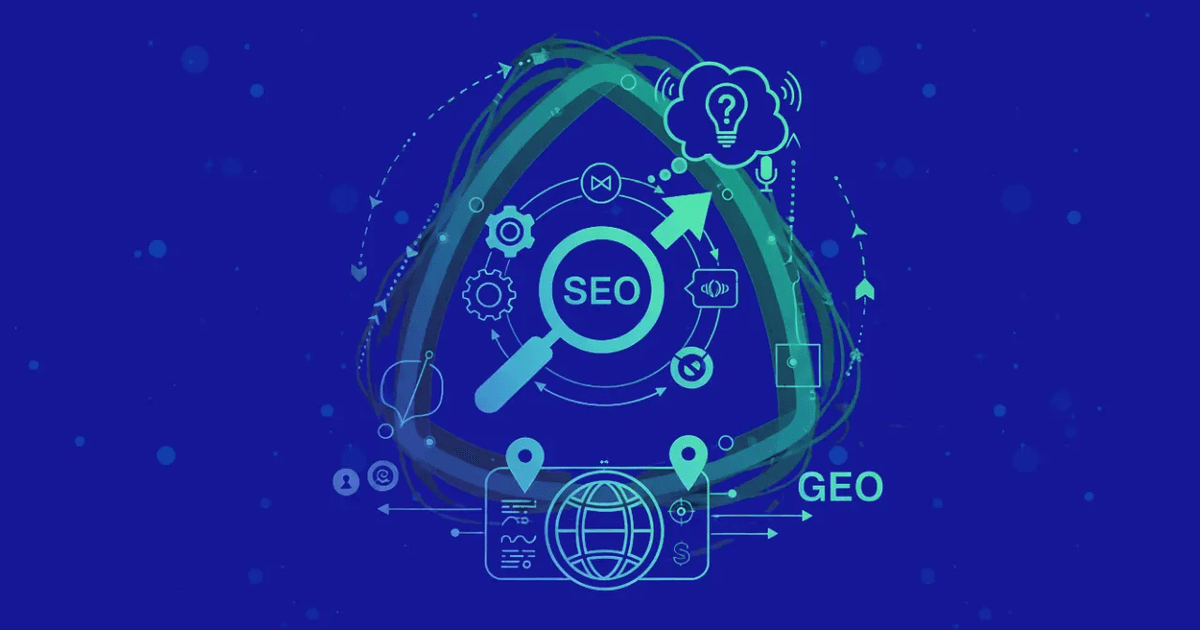
The three words name three different payoffs
SEO, or search engine optimization, is the work that gets a page ranked as a clickable link on a results page.
AEO, or answer engine optimization, is the work that makes one passage on the page easy to lift as the answer. The lift can be a snippet, which is the short extract Google shows above or beside the links, or an assistant reading the line out loud.
GEO, or generative engine optimization, is the work that gets your brand named inside a written AI answer. An AI Overview is Google’s version of that answer: a paragraph written by a model, sitting above the links, with a few sources credited beside it.
The three are not rivals and they are not stages of history. They stack. A page an AI answer can quote is first a page a crawler can read.
All three land on pages you already own: collections, product pages, and the few guides that explain what you sell. Those are the pages that already carry your revenue, which is where our ecommerce work starts too. So ownership, not novelty, decides the order. Autonomous Technologies covers all three as SEO, AEO and GEO for ecommerce.
This is for the operator who runs one Shopify store and still owns the site after launch. You have a few hours a month, not a content team. It is not for an agency running 40 client stores, because the ownership column above collapses into a process question instead. It is also not for a brand that sells only through a marketplace, where none of the three is your first problem.
The rule that sets the order: a page has to be indexed and eligible for a snippet before any AI feature can use it. Google’s own guidance, last updated 10 December 2025, says there are no additional requirements to appear in AI Overviews or AI Mode, and no AI text files or special markup to create. If the page is blocked, the other two jobs cannot start.
Classic ranking is still the only one that pays in clicks
Fit. Pick SEO first when the store has pages that people already search for by name: a category, a brand you stock, a problem your product solves. Pew Research Center tracked 68,879 Google searches in March 2025 and published the result on 22 July 2025. Visits with no AI summary ended in a click 15% of the time. Visits with a summary ended in a click 8% of the time. Half is still a large number compared with zero.
Ownership. This sits with whoever controls the theme, the page titles and the internal links. On a Shopify store that is usually one person, and usually not a writer.
Running cost. The cost is maintenance, not creation. Every catalogue change moves a URL, orphans a page, or leaves a title describing a product you no longer stock. You can see what that neglect costs in our own numbers. Of 92 live pages, 40 had zero impressions across two consecutive 28-day windows ending 18 September 2026.
What it fails on. A page nobody links to. Ranking is comparative, so a page with no inbound link from elsewhere on your site has no starting position for you to improve.
Answer engines reward structure, not more words
The queries themselves changed shape. People stopped typing three words and started asking the whole question, often out loud. That moved the lever off exact keyword placement. What replaces it is covering the topic properly: the words around the term, the question behind it, and a short answer a machine can lift whole. It is the same reason page speed, mobile rendering and clean navigation still count. They are all inputs to one judgement about whether this page is the one worth showing.
Fit. Pick AEO when the questions are already arriving and the answers are buried. Shipping windows, sizing, returns, compatibility, lead times. Pew found 18% of Google searches in March 2025 produced an AI summary, so roughly one search in five is being answered before the click.
Ownership. This sits with whoever writes product and policy copy. It is an editing job, not a development job.
Running cost. The cost is drift. An extracted answer is a promise you made once, and it goes stale the moment a policy changes. A wrong shipping window read aloud by an assistant is worse than no answer at all. Google’s guidance asks that structured data match the visible text, so the FAQ markup and the paragraph have to move together.
What it fails on. Pages that bury the answer. In our own audit of 13 live pages on 11 September 2026, only 2 opened with an answer a machine could lift cleanly. Every one of the 13 was indexable and unblocked. Crawl access was never the constraint. Structure was.
AI citation goes to whoever owns the evidence
Fit. Pick GEO last, and only when you have something first hand to be cited for. A generative answer blends sources, so it names whoever supplied the specific fact. It does not name whoever wrote the most fluent paragraph, and that is good news for you.
Ownership. This sits with whoever holds the numbers, which in a founder-led store is the founder. It cannot be delegated to a writer, because the writer has nothing to cite.
Running cost. The cost is measuring something real on a cadence. One fresh figure a quarter, with a unit and a period attached, is enough to keep a page worth citing.
What it fails on. Pages with nothing of their own in them. In that same September 2026 audit, six of our older guides carried roughly forty numbers between them and not one external source. Those are the pages a model has no reason to name.
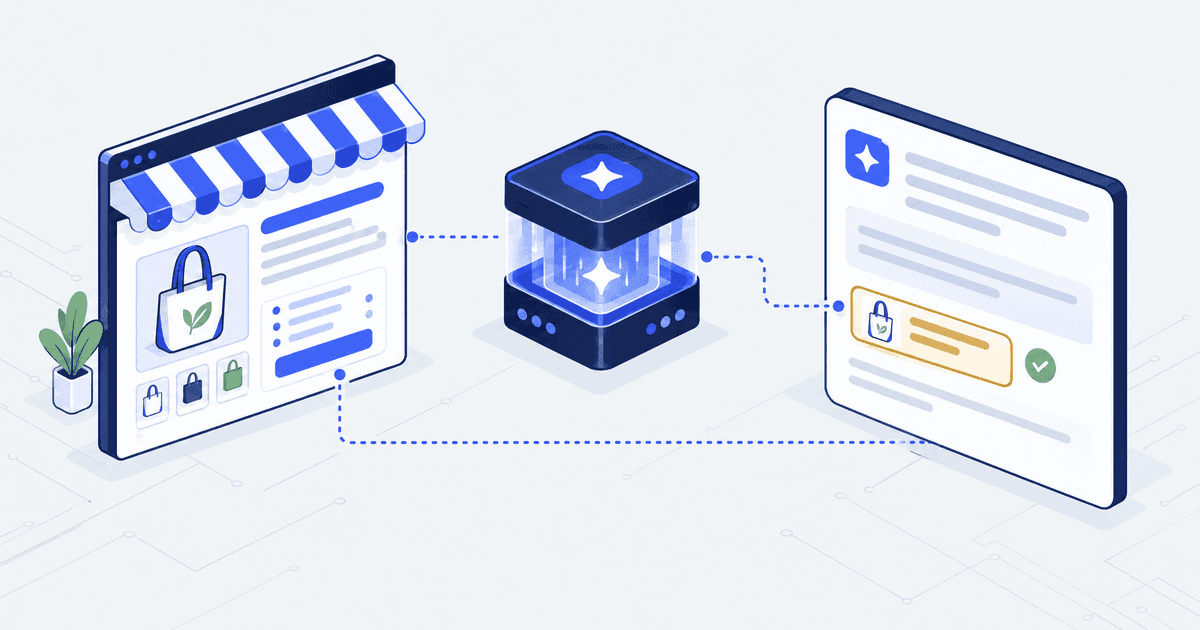
There is a commerce edge to this that is easy to miss. On 29 September 2025, Stripe and OpenAI published the Agentic Commerce Protocol, an open standard for agent-initiated checkout, with Etsy merchants live and over a million Shopify merchants named as coming. That makes the agent surface a sales channel and not only a citation channel. Check its current status before you plan a quarter around it.
| Job | Who owns it in the store | Running cost | What our September 2026 audit found |
|---|---|---|---|
| SEO | Whoever controls theme, titles and links | Recheck titles and links on catalogue change | 13 of 13 pages indexable and unblocked |
| AEO | Whoever writes product and policy copy | Rewrite the answer on every policy change | 2 of 13 pages opened with a liftable answer |
| GEO | Whoever holds the numbers, usually the founder | Measure one real thing each quarter | 6 guides carried about 40 unsourced numbers |
What we picked for our own pages, and what it cost
Getting this order right is worth about an hour a month to you. Getting it wrong costs a quarter of writing that nobody reads, which is what it cost us. Autonomous Technologies is a Shopify systems agency, and we ran this decision on our own site for a year with the order backwards.
We had written the AI-search commentary first. It read well and it earned nothing. So on 20 September 2026 we pulled the numbers instead of arguing about them.
| What we measured, 22 August to 18 September 2026 | Number |
|---|---|
| Live blog and case-study pages | 92 |
| Google impressions | about 9,200 |
| Google clicks | 12 |
| Pages with zero clicks | 82 |
| Pages with zero impressions across both 28-day windows | 40 |
| Impressions on the best-placed page, at position 5.3, zero clicks | 640 |
That last row is the whole argument. A page sitting at position 5.3 with 640 impressions and no clicks does not have a ranking problem, an AI problem, or a citation problem. It has a title and snippet problem, and that is SEO work you can do in an afternoon.
So we picked the order in the callout at the top. Titles and internal links first. Answer structure second, on the pages that already draw impressions. Citable evidence third, and only on pages where we had measured something ourselves.
The same loop now runs weekly on our own pest-control venture as a growth routine where an agent drafts the changes and a person approves them. In its first merged run, on 6 September 2026, 12 of 22 proposed items shipped and 3 were dropped at review. The review stage changed the output rather than rubber-stamping it.
The objection worth taking seriously: none of this sends traffic on its own. Pew measured a 1% click rate on links inside an AI summary in March 2025. If what you need this quarter is sessions, GEO is the wrong hour. Spend it on the pages that already rank and still lose the click.
This breaks when the page has nothing of its own to cite
It breaks on generic pages. A page about AI visibility with no first-hand number in it is the page least likely to be named. Owner: whoever holds the data, usually the founder.
It breaks on drift. Extracted answers outlive the policies they describe. Owner: whoever approves policy and price changes, who now has one more place to update.
It breaks on the platform layer. Agent checkout is a platform decision, not a page decision. No amount of page copy enrols you. Owner: whoever manages the Shopify plan and the sales channels.
It breaks on measurement. In our Search Console export for the 28 days to 18 September 2026, no field told us which impressions came from an AI summary. You can measure rank and clicks. You cannot yet attribute a citation, so do not promise yourself a number you have no way to read.
It breaks when the three become three checklists. They are one system with one order. Run them as separate projects and you will fund the expensive one first.
What operators ask before they pick one
Is AEO just SEO with a new name?
No. SEO competes for a position in a list of links. AEO competes to be the passage that gets extracted, which rewards a direct answer near the top of the page and a clean question-and-answer structure. The same page can win one and lose the other.
Do I need special files or markup to appear in AI Overviews?
No. Google’s guidance on AI features, last updated 10 December 2025, states there are no additional requirements to appear in AI Overviews or AI Mode, and no AI text files or special markup to create. Keep the page indexed, allow a snippet, and make sure any structured data matches the visible text.
Does E-E-A-T decide any of this?
E-E-A-T stands for experience, expertise, authoritativeness and trustworthiness, and it comes from Google’s search quality rater guidelines. Google’s own page on helpful content says E-E-A-T is not itself a ranking factor, though a mix of signals that identify it is useful. Treat it as a description of what to publish, not a dial to turn.
Where should a store with no blog start?
On product and collection pages, not on a blog. Fix the titles and the internal links first, then put a direct answer at the top of the pages that already draw impressions. A blog is the most expensive place to start and the slowest to pay.
Can I tell whether an AI answer cited my store?
Not from Search Console today. Our own export for the 28 days to 18 September 2026 carried clicks, impressions, position and query, and nothing that separated AI summary appearances. Track your brand queries and your direct traffic as a proxy, and say out loud that it is a proxy.
If you do one thing this week, do this. Open Search Console, sort your pages by impressions, and rewrite the title and meta description on the three pages with the most impressions and the fewest clicks. That is the SEO step, and it takes an afternoon.
After that the order gets specific to your catalogue, and it is a short conversation rather than a project: one store, one week of search data, and you leave with the order to work in and the name against each part.